When you think about vehicle maintenance, the differential rarely takes center stage in your mind. Yet, it’s one of the most vital components for smooth and safe driving. Your car’s front or rear differential manages the torque distribution between wheels, allowing them to rotate at different speeds, especially when cornering. Ignoring warning signs of differential failure can lead to costly repairs and jeopardize your vehicle’s performance and safety.
Recognizing the early symptoms of a failing front or rear differential is essential for any driver. Whether you own a front-wheel-drive, rear-wheel-drive, or four-wheel-drive vehicle, differentials play a critical role in how your car handles and drives. As we look deeper into these components, we’ll uncover the key signs that indicate your differential needs attention, explore common causes of failure, and provide actionable advice on maintenance and repair options.
The goal is clear: help you identify problems early through a technical yet accessible lens, so you can confidently safeguard your differential’s health and your vehicle’s longevity. After all, understanding vehicle noises, gear damage symptoms, and fluid leaks can keep minor mechanical issues from escalating into a major headache on the road.
Key Takeaways:
- Differentials allow wheels to rotate at different speeds; essential for safe cornering.
- Noises such as whining or clunking are key early warning signs of differential failure.
- Leaking fluid from the differential housing often indicates gasket or seal problems needing attention.
- Vibration and handling issues may signal deeper mechanical wear inside the differential system.
- Proper maintenance, including timely oil changes, drastically extends differential lifespan.
Recognizing the Top Warning Signs Your Front or Rear Differential is Failing
The differential is a complex system responsible for transferring power from your engine to the wheels while allowing each wheel to spin at a different speed during turns. This vital function prevents unnecessary tire wear and drivetrain stress.
When a differential begins to fail, your vehicle will start exhibiting a range of symptoms. Some are subtle and easy to overlook, while others can severely impair vehicle control. Let’s dive into the most common warning signs you should never ignore, with practical insights on how these manifest on the road:
1. Unusual Noises: Whining, Clunking, or Howling
If you hear persistent whining or whirring noises when accelerating, decelerating, or especially while cornering, your front or rear differential may be the culprit. These sounds often increase in volume or pitch as the vehicle’s speed changes. They typically indicate worn-out bearings, failing pinions, or damaged ring gears inside the differential.
Additionally, sharp clunks or clicking noises during turns are often telltale signs that the gears or differential side components are experiencing excessive wear or misalignment. Ignoring these vehicle noises can lead to catastrophic gear damage.
2. Excessive Vibration While Accelerating
Feeling a strange vibration growing stronger with acceleration? This could point to an imbalanced or damaged differential. When the internal gears or axle shafts wear unevenly, they cause the driveshaft to vibrate, which translates through the vehicle’s chassis. Often, this vibration forces drivers to reduce speed for comfort and safety.
Though vibrations can also originate from tires or suspension issues, do not discount the differential’s role without inspection. A thorough diagnostic from a trusted mechanic often isolates the vibration source, ensuring prompt repair.
3. Difficulty Steering and Handling Problems
One of the more dangerous effects of differential failure is impaired handling, especially noticeable when cornering. Your vehicle might pull towards one side or feel loose and unresponsive in the steering wheel. This decrease in control arises because the differential no longer transfers torque efficiently to the wheels, disrupting traction balance.
Drivers often describe these handling changes as unsettling, reducing confidence behind the wheel—an important indicator that you need a differential inspection soon.
4. Visible Oil Leaks from the Differential Housing
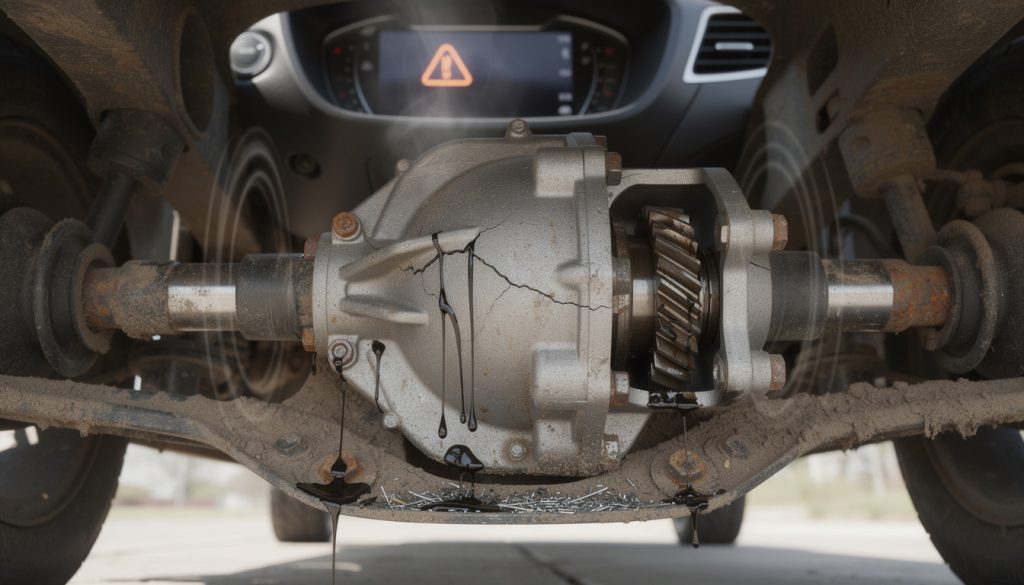
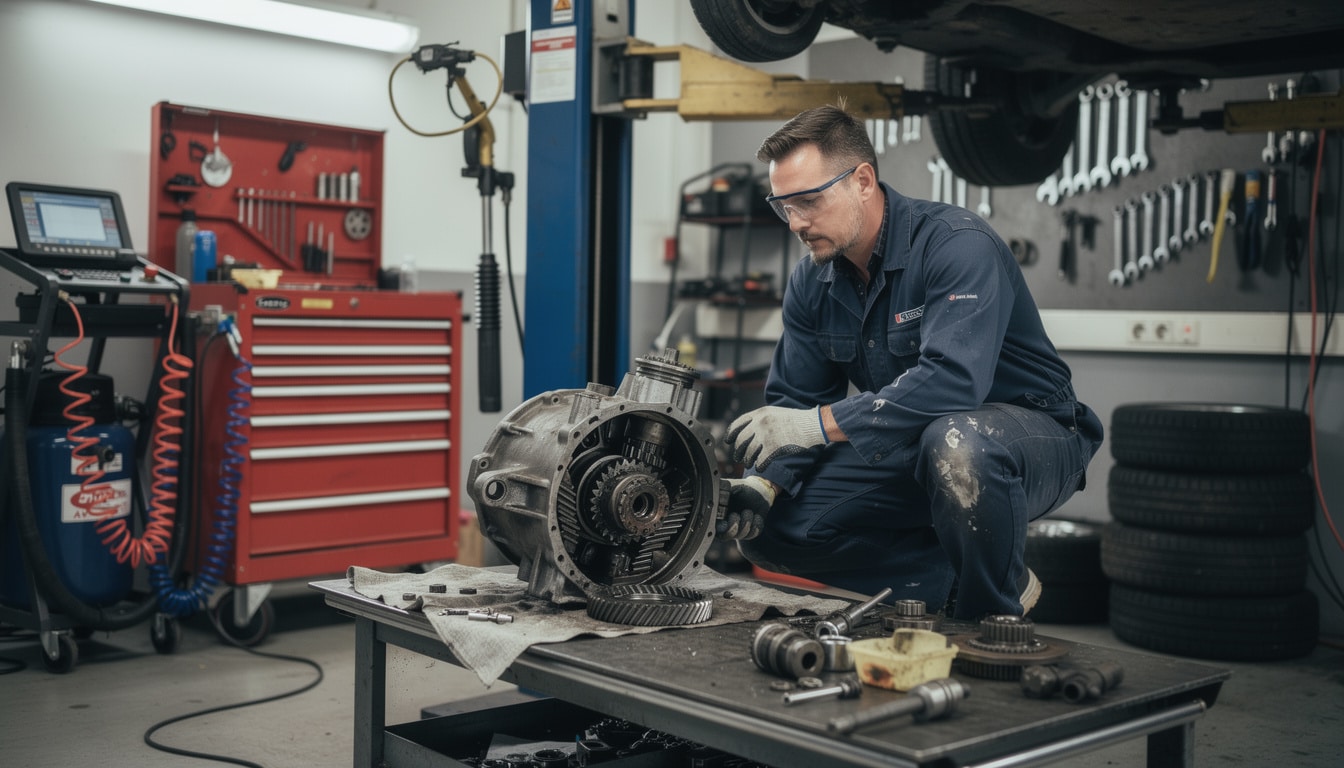
The differential relies heavily on specialized gear oil to reduce friction and heat within its internal components. If you notice leaking fluid pooling beneath your vehicle around the front or rear axles, it’s often due to worn seals or gaskets. Likewise, a burning smell from the gearbox could indicate contaminated or insufficient differential oil, causing overheating.
Timely spotting of leaks helps avoid damage to critical gears and bearings, preventing costly repairs and ensuring smoother operation.
5. Uneven or Premature Tyre Wear
Uneven tire tread wear, particularly on the outer edges, can be an indirect but valuable indicator of differential troubles. Since differentials control torque distribution, their malfunction disrupts normal tire rotation speeds during turns. This results in abnormal stress and wear patterns on the affected tires.
Regular tire inspections should include checking for such patterns to catch early warning signs.
Why Do Differentials Fail? Understanding the Root Causes of Differential Failure
Understanding the underlying causes of differential failure empowers you to mitigate risks through smarter car maintenance and driving habits. Here are the main factors that stress or damage differentials:
Oil Issues: Leaks and Wrong Oil Types
The most common cause of differential troubles is inadequate lubrication. A small undetected leak means metal gears grind against each other without sufficient protection, leading to accelerated wear. Additionally, using an oil type inconsistent with your vehicle’s specifications worsens lubrication efficiency, resulting in premature overheating and eventual damage.
Ensure you always check your owner’s manual for the correct differential oil type and adhere strictly to change intervals—usually every 30,000 to 60,000 miles.
Reckless Driving and Heavy Loads
Aggressive driving, such as excessive speeding, fast cornering, or spinning wheels, places unacceptable strain on the differential. Towing heavy trailers or hauling significant loads similarly exacerbates wear by increasing torque demands beyond normal operating limits.
Avoiding these stressful conditions markedly extends the gearbox’s life, protecting the differential from overheating and mechanical breakdown.
Natural Wear and Tear Over Time
Like any mechanical system, a differential is subject to wear. Most differentials last between 100,000 and 150,000 miles, depending largely on usage and maintenance. Normal wear gradually reduces the precision fit of gears and bearings, causing operational symptoms that worsen if left unmanaged.
| Cause of Differential Failure | Effect on Differential | Preventive Measure |
|---|---|---|
| Oil leaks or low oil level | Increased friction and overheating, gear and bearing damage | Regular oil checks and timely replacement of seals |
| Incorrect oil type | Poor lubrication and temperature regulation | Follow manufacturer’s oil type recommendations |
| Reckless driving and heavy loads | Excessive wear and overheating | Drive sensibly and avoid overloading |
| Natural wear and tear | Gradual gear and bearing degradation | Routine inspections and preventive maintenance |
Effective Repair and Maintenance Options for Front and Rear Differentials
Once you identify differential trouble, several repair paths exist depending on the damage extent. The good news is that some fixes can restore your vehicle’s function without the need for expensive replacements.
Common Repairs: Seal and Bearing Replacement
If your differential oil is leaking due to dried or damaged gaskets, replacing these seals can stop leaks immediately. Furthermore, worn pinion or side bearings are common repair targets, although they often demand a longer repair time and increased labor costs.
Major Overhauls or Replacement
In cases where the differential gears sustain significant damage—evidenced by constant gear grinding and performance loss—a full gear replacement or installing a rebuilt or used differential might be the only option. While pricier, replacing the entire unit can sometimes be more cost-effective in the long run given further wear and potential hidden damage.
Maintenance Tips for Maximizing Your Differential’s Lifespan
Proper maintenance is the key to avoiding differential failure and costly repairs. Here’s how you can give your differential the best chance for longevity:
- Regular Oil Changes: Stick to manufacturer-recommended intervals for differential oil changes to ensure proper lubrication and temperature control.
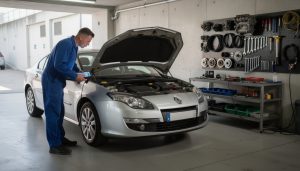
- Routine Inspections: Have your drivetrain checked annually, including the differential, to catch early signs of wear or leaks.
- Moderate Loads and Driving Style: Avoid hauling beyond your vehicle’s rated capacity and reduce wheel spin to minimize internal stress on differential gears.
- Immediate Attention to Noises or Vibrations: Never ignore unusual sounds or driving sensations; early diagnostics can prevent major damage.

Common Differential Problems and How to Detect Them Early
Spotting differential problems early is critical for avoiding expensive repairs. Aside from noises and leaks, here are some lesser-known but important symptoms that can save you time and money:
Out-of-Balance Driveshaft Effects
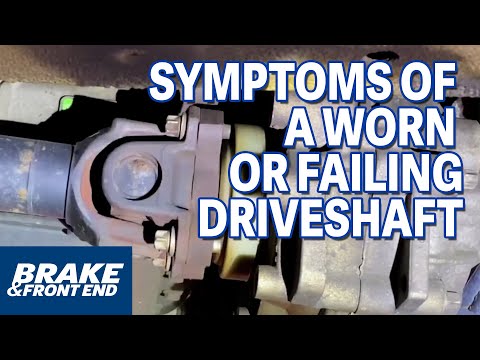
A faulty differential can cause the driveshaft to become out of balance, leading to strange shudders, vibrations, and occasional knocking sounds from beneath the vehicle. Such symptoms often worsen with acceleration or cornering, signaling the need for immediate mechanical evaluation.
Burning Smell from Differential Overheating
Overheated differential oil produces a distinct burning odor. If you detect such a smell while driving, it’s a sign your differential is under abnormal stress—likely due to low or dirty oil—and requires inspection without delay.
Understanding these problems equips you to take action swiftly, reducing the risk of full differential failure and keeping your vehicle safe on the road.
How often should I change the differential oil?
Most vehicle manufacturers recommend changing differential oil every 30,000 to 60,000 miles. However, always refer to your owner’s manual for specific guidance tailored to your model and driving conditions.
Can I drive safely with a failing differential?
Driving with a failing differential can be dangerous as it impairs vehicle handling and can cause further damage. It’s best to have it inspected and repaired promptly to ensure safe operation.
Are front and rear differential repairs different?
Yes, the general principles are similar, but front differentials often involve more complex components, especially in four-wheel-drive vehicles. Repair costs and procedures may vary accordingly.
What causes differential oil leaks?
Leaks generally result from worn out seals or gaskets, physical damage to the housing, or improper maintenance. Regular inspections can identify leaks early before serious damage occurs.
Is it worth repairing a differential or should I replace it?
Minor repairs such as seal replacement are often worthwhile to extend differential life. However, if gears are severely damaged, replacing the differential may be the safest and most cost-effective solution.