The Hyundai Tucson has established itself as a popular compact SUV, capturing attention with its bold design and feature-rich interiors. Since its debut in 2004, it has undergone significant evolution, now offering choices ranging from petrol and diesel engines to hybrid and plug-in hybrid variants. Still, understanding the reliability and common faults of this vehicle is essential before making a purchase, whether new or used. This detailed assessment explores the most frequently reported vehicle problems carried by the Tucson and offers insightful guidance for informed decisions as of 2026.
Key Takeaways :
- Frequent issues: Transmission shifting glitches, engine knocking, airbag module defects.
- Reliable years: 2018 and post-2019 models excel in durability and performance.
- Electrical and safety features: Forward collision systems and infotainment occasionally face glitches.
- Maintenance needs: Early detection of recalls and routine servicing are vital for longevity.
- Overall: Tucson balances modern style and dependable mechanics, yet awareness of its quirks is necessary.
Identifying the Most Common Engine and Transmission Issues Affecting Hyundai Tucson Reliability
The powertrain of the Hyundai Tucson, particularly its engine and transmission, undergoes rigorous daily stress, making it critical to investigate common faults that may compromise its durability. Owner reviews and automotive assessments reveal two leading concerns: transmission shifting problems and engine-related noises or failures.
Transmission problems reported by Tucson owners primarily center around rough or delayed shifting, leading to unpleasant driving experiences marked by jerky or hesitant gear changes. These symptoms often stem from outdated or miscalibrated transmission software, which Hyundai dealerships typically fix through software updates or recalibration. Such solutions highlight the significance of keeping software up to date to prevent worsening of issues.
Cases of complete transmission failure are rarer but can be catastrophic, immobilizing the vehicle or causing it not to shift gears properly. Hyundai’s responsiveness in recalling certain Tucson models with transmission defects underlines the company’s proactivity in addressing significant defects.
Engine-related headaches, including knocking and ticking sounds, point to deeper mechanical concerns within the power unit. Particularly for high-mileage models surpassing 150,000 miles, an issue with the connecting rod bearing has been uncovered. At least 100,000 Hyundai Tucsons were recalled due to this fault, with the implementation of the Knock Sensor Detection System serving as a preventive mechanism, alerting drivers to halt driving if abnormal engine noises appear. This system helps minimize risk but emphasizes the importance of monitoring for noises.
Additional engine performance concerns include sluggish acceleration, commonly noted in older Tucson models. Such issues usually arise from clogged fuel injectors, failing sensors, or fuel delivery problems rather than outright mechanical failure. Maintenance routines that include cleaning fuel components or timely replacement of worn sensors effectively mitigate these concerns.
💡 Expert Tip: When evaluating a used Hyundai Tucson, always request a detailed maintenance record showing transmission software updates and any engine recall repairs to anticipate and avoid costly repairs.

Electrical and Safety Systems: Frequent Malfunctions and Their Impact on Hyundai Tucson Reliability
Beyond mechanical reliability, the Hyundai Tucson’s electrical systems play a crucial role in safety and comfort, yet several recurring electrical malfunctions have been identified across multiple model years. Recognizing these faults enhances your ability to predict maintenance expenses and functional reliability.
One notable issue involves the airbag control module; defective units have prompted recalls due to inflated risks of improper passenger airbag deployment during accidents. This kind of safety fault, while alarming, has largely been addressed by Hyundai through official campaigns that typically cover repair costs fully.
Sound system failures are another common complaint where speakers abruptly lose output during various audio activities. This is usually traced back to software glitches, and owners have found that hard resets (disconnecting and reconnecting the battery) temporarily or permanently resolve the disruption.
Air conditioning troubles manifest as weak cooling, warm air flows, or complete shutdowns. Diagnosing causes often reveals blown fuses, refrigerant loss, compressor failure, or leaks in hoses or connections. Early detection of such AC system issues is essential to avoid costly repairs and maintain driving comfort in warmer months.
The forward collision warning system—designed to alert and, if necessary, intervene to avoid accidents—has drawn mixed owner reviews. Faulty sensors, inconsistent alerts, and false alarms impair reliability, creating driver confusion or mistrust. Dealership software updates and sensor recalibrations are commonly pursued to improve system consistency and safety performance.
Lighting also warrants attention: Tucson drivers frequently cite dim or flickering headlights and fast bulb burnout rates. These problems relate to faulty components, water ingress due to poor sealing, or inferior bulb quality. Addressing these issues promptly prevents nighttime visibility hazards.
Door lock actuators are prone to malfunction, causing unexpected locking or unlocking, which sometimes leaves owners locked out or vulnerable to theft. Replacing the Actuator Control Module is an effective fix when these symptoms arise.
List of Common Electrical Problems in Hyundai Tucson:
- Defective airbag control module
- Infotainment speaker failure
- Air conditioning system dysfunction
- Forward collision system inconsistencies
- Headlight flickering and premature burnouts
- Electrical door lock malfunctions

Key Factors to Weigh When Buying a Used Hyundai Tucson: Avoiding Pitfalls and Ensuring Reliability
Purchasing a used Hyundai Tucson demands prudent evaluation of several important aspects that can influence long-term satisfaction. While the model is reputed for moderation in repairs, some production years have demonstrated increased vehicle problems that potential buyers should carefully consider.
Reports from drivers and automotive surveys highlight that Tucson model years from 2011 through 2018 contain a higher frequency of defects, including engine issues, sluggish acceleration, and in some instances, overheating leading even to engine fires. Notably, the 2013 model year appears as an exception, delivering better dependability during this range. Hence, skipping most years before 2018 (except 2013) is a prudent choice.
Years post-2018, such as 2019, 2020, 2021, and 2022, are recognized for improved reliability, reinforced by Hyundai’s commitment to updated technology and comprehensive quality control. The 2023 Tucson especially stands out with an enhanced focus on electrification, luxurious interior upgrades, and refined driving dynamics, though it lacks a diesel engine option still favored by some competitors.
Aside from production year considerations, confirming the completion of Hyundai recalls—primarily for transmissions, engine bearings, and airbags—is vital for safe ownership. Equally, thoroughly inspecting the service history and any maintenance records can provide clarity on software updates, part replacements, and general care.
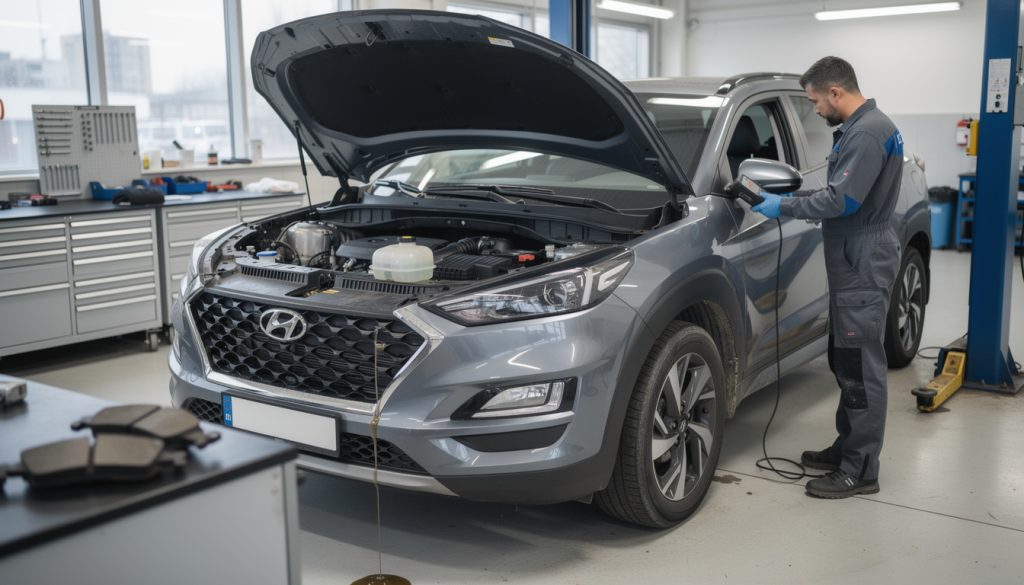
💡 Expert Tip: Prioritize comprehensive pre-purchase inspections by certified mechanics familiar with Hyundai Tucson to detect hidden issues and avoid unexpected expenses.
Reliability Ratings and Owner Reviews: What the Numbers Reveal About Hyundai Tucson Durability
Independent reliability indices and owner reviews provide valuable insight into how well the Hyundai Tucson performs under real-world conditions. According to recent assessments, including surveys by Carbuyer.co.uk and Auto Express, the Tucson commands a solid reputation for reliability and safety within its segment.
The brand’s generous five-year/unlimited-mileage warranty reassures drivers about Hyundai’s confidence in the Tucson’s longevity. The fourth-generation Tucson, introduced recently, achieved a top-tier five-star Euro NCAP safety rating with an exceptional 86% score for passenger protection, reinforcing its appeal to safety-conscious families.
However, these favorable ratings depend heavily on consistent maintenance and addressing minor issues promptly. Many owners commend the Tucson for its comfortable ride, user-friendly infotainment, and attractive styling, though negative feedback mostly concentrates on avoidable faults such as software glitches and occasional transmission wear. Longevity beyond 150,000 miles is achievable but demands vigilance in servicing particularly the engine and transmission components.
| Aspect | Common Issues | Recommended Action |
|---|---|---|
| Engine | Knocking, ticking, acceleration lag | Regular maintenance, Knock Sensor Checks, fuel system cleaning |
| Transmission | Rough shifting, delayed engagement, failure | Software recalibration, timely repairs, recall checks |
| Electrical | Airbag module defects, speaker failure, door locks | Recall repairs, resets, module replacement |
| Safety Systems | Forward collision system faults | Software updates, sensor recalibration |
| Lighting | Dimming, flickering headlights | Bulb replacement, sealing repair |
For enthusiasts and safety advocates, the Tucson’s broad suite of standard features combined with its ongoing refinements make it a dependable choice—if its known issues are actively managed.

Choosing the Best Hyundai Tucson Model Year: Practical Benchmarks for Reliability and Value
Deciding which Hyundai Tucson model year to invest in can dictate your ownership experience significantly. Among recent evidence and owner feedback, the 2018 Tucson emerges as a standout for reliability, marrying robust engineering with fewer recorded faults. Models from 2019 onward continue to build on these strengths, with updates in software and safety tech bolstering overall quality.
The 2023 Tucson, representing the latest generation, boasts impressive advancements in interior refinement and electric powertrain options, positioning it as a compelling choice for those valuing modernity and eco-friendly performance.
Conversely, caution is warranted for earlier models, particularly those dating between 2011 and 2017, where the frequency of troublesome engine issues and transmission problems rises. Owner experience suggests that these vehicles may require more frequent visits to the workshop, potentially increasing total cost of ownership.
In budget-conscious scenarios, carefully vetted used options from 2018 to 2022 provide an attractive compromise, affording access to proven reliability while keeping acquisition costs manageable.
To sum up, opting for later-model Hyundai Tucsons typically corresponds to enhanced durability, fewer repairs, and improved driving enjoyment, especially when paired with informed buying practices and attentive maintenance.
Are Hyundai Tucsons reliable compared to other compact SUVs?
The Hyundai Tucson is generally more reliable than many competitors in the compact SUV segment, thanks to its thoughtful engineering and robust warranty program, though attention to known issues is key.
What is the main cause of engine knocking in the Tucson?
Engine knocking is often caused by faulty connecting rod bearings, especially in higher mileage models, which Hyundai has addressed via a recall and the installation of knock sensor detection systems.
How often should I service the transmission in a Hyundai Tucson?
Regular servicing, including software recalibration at recommended intervals, especially if you notice shifting imperfections, helps maintain transmission health and avoid costly failures.
What years should I avoid when buying a used Hyundai Tucson?
It is best to avoid most 2011-2018 models excluding the 2013 variant because of higher reported issues such as engine problems and transmission defects.
Are electrical problems common in the Hyundai Tucson?
Electrical issues like airbag module failures, speaker malfunctions, and faulty door locks have been reported but are often resolved with software updates or recalls.