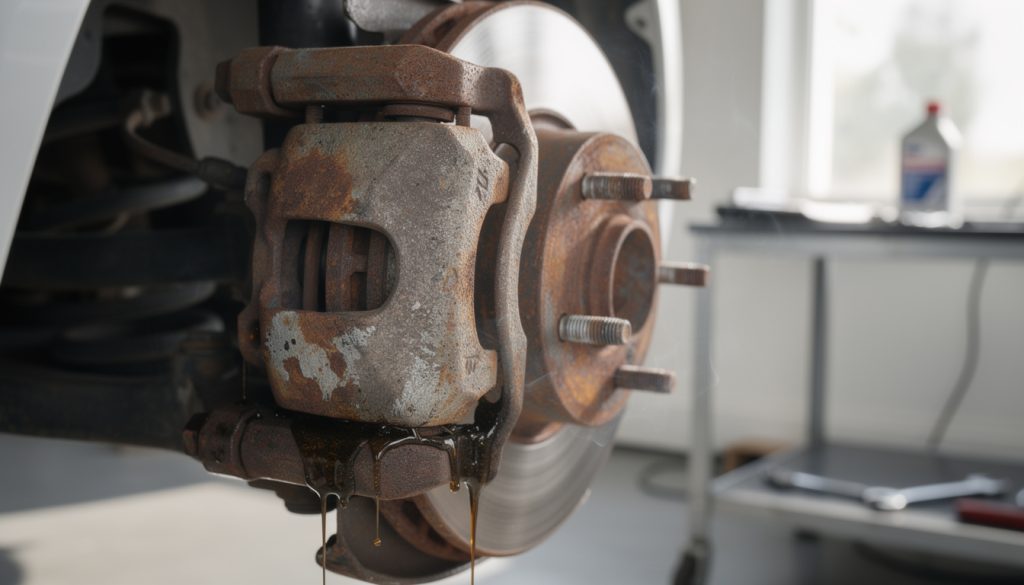
The braking system of a vehicle is its crucial safety backbone, intricately designed to respond efficiently to every command from the driver. Among its vital components, the brake caliper plays an indispensable role by acting as the clamp that presses brake pads against the rotors, creating the friction necessary to halt the car. Recognizing the signs of faulty brake calipers is essential to avoid potentially dangerous situations and costly repairs. When a brake caliper malfunctions, it can manifest through various brake warning signs that alert the driver to underlying problems.
These issues may include uneven brake pad wear, fluid leaks, or strange noises, each impacting vehicle safety and performance. As vehicles evolve, understanding the mechanics behind brake caliper problems and the remedies available becomes even more vital. Whether it’s through a simple brake caliper replacement or an in-depth brake repair, addressing the issue promptly ensures smooth and safe driving experiences. The following exploration details the common symptoms, causes, and effective repair options for malfunctioning brake calipers, offering practical guidance to any vehicle owner or mechanic eager to maintain optimal brake system maintenance.
Key Takeaways :
- Identifying faulty brake caliper symptoms early can prevent more severe damage.
- Leaks, noises, and uneven wear are critical indicators of caliper issues.
- Understanding the causes helps in choosing the right repair or replacement strategy.
- Regular inspection and timely brake caliper replacement minimize risks.
- Professional advice and quality tools are key for effective brake caliper repairs.
Recognizing the Top 9 Brake Warning Signs Indicating a Faulty Brake Caliper
Understanding the specific brake warning signs associated with faulty brake calipers is the first step toward maintaining vehicle safety and performance. Unlike brake pads that wear out predictably, calipers are built robustly but still can suffer from issues that degrade their functionality over time.
1. Brake warning light on the dashboard: While this light can indicate multiple braking problems, persistent illumination often deserves an immediate inspection of the calipers. The light indicates the system has detected irregular pressure or fluid problems linked to calipers.
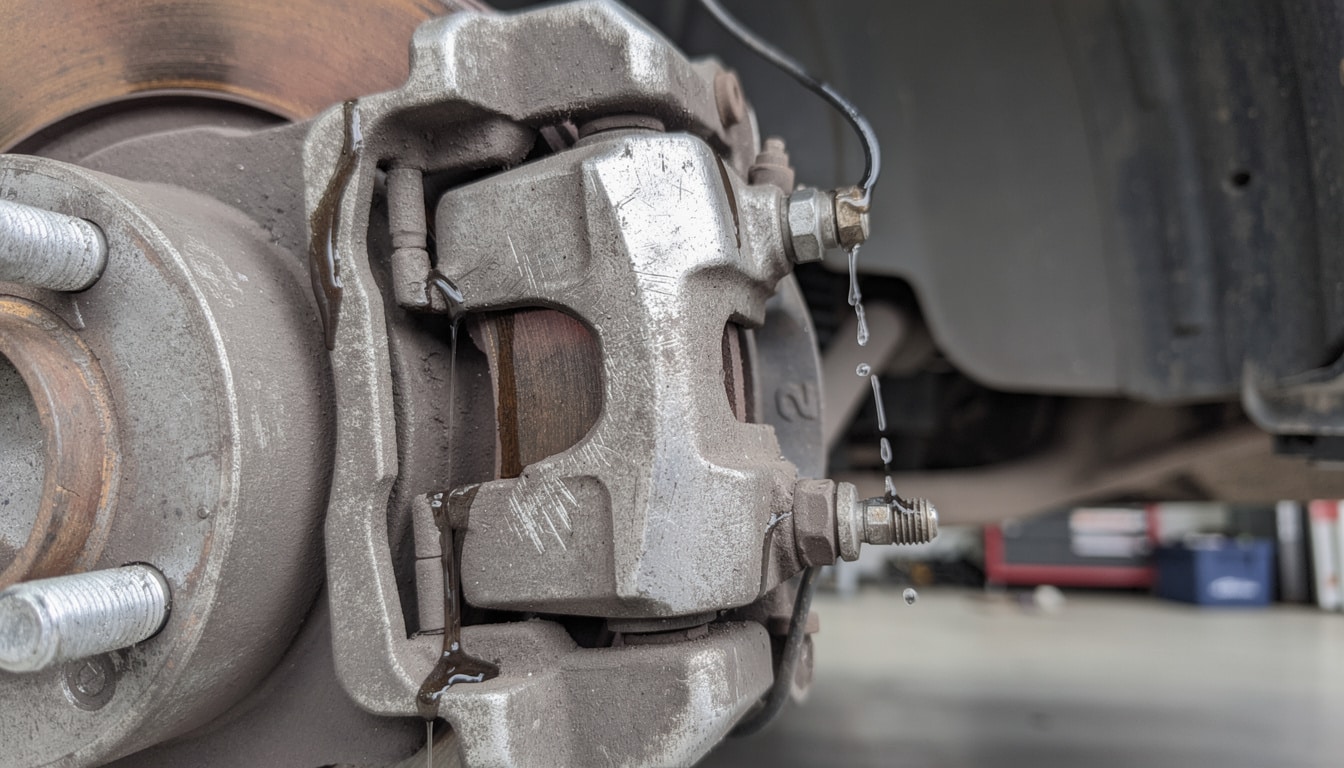
2. Brake fluid leaks: Your caliper contains seals to maintain brake fluid pressure. A leak around the piston or bleeder screw compromises the hydraulic system and can cause your caliper to malfunction.
3. Vehicle pulling to one side: A stuck or seized caliper clamps the brake pad unevenly, causing the vehicle to pull strongly left or right when braking or coasting. This condition can cause dangerous steering behavior.
4. Uneven brake pad wear: When the caliper sticks on one side, that brake pad experiences excessive friction and wears faster than the opposite side, disrupting overall brake balance.
5. Reduced stopping power: Faulty calipers weaken braking force, extending stopping distances. Feeling the need to pump the brake pedal often indicates hydraulic or caliper problems.
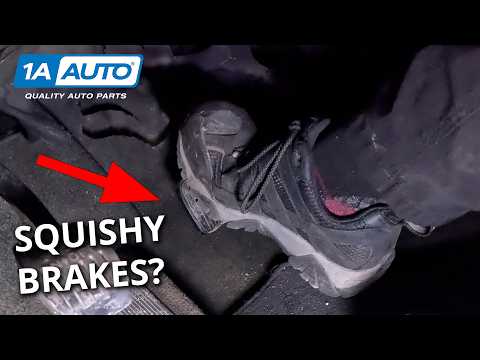
6. Soft or spongy brake pedal: A leaky or malfunctioning caliper can cause your brake pedal to feel less firm, indicating compromised hydraulic pressure.
7. Clunking or rattling sounds: Loose calipers may shift during vehicle movement, creating noticeable clunking noises over bumps.
8. Squealing or grinding noises: Continuous pad contact due to a sticking caliper results in high-pitched noises or grinding, indicating excessive wear or damage.
9. Burning smell or smoke: Overheating from a seized caliper generates a strong burning odor or even visible smoke near the wheel hub.
Early detection of these signs reduces the risk of brake system failure significantly. Regular visits to a trained mechanic for brake system checks are highly advisable to keep your car functioning safely and efficiently.
What Causes Brake Caliper Problems? Understanding Root Issues to Aid Effective Brake Repair
Although brake calipers are engineered for durability, various factors contribute to their failure, impacting overall vehicle braking.
Heat exposure is a constant challenge, as repeated braking generates substantial friction and temperatures potentially exceeding 500°C near the calipers. Over time, this heat can degrade seals, brake fluid, and metal components.
Another frequent cause is the accumulation of dirt, brake dust, and debris in and around the caliper slides. Without proper lubrication, these particles promote corrosion and cause calipers to stick, leading to uneven pad wear and braking inefficiency.
Also, wear or damage to associated components can instigate caliper problems:
- Brake hoses: Older or deteriorated hoses often block fluid return, causing calipers to stay clamped longer than intended.
- Caliper slides: These allow smooth pad movement, but if seized due to exposure or poor maintenance, brake pads won’t release properly.
- Caliper bolts: Damaged or rusted bolts lose their ability to secure the caliper in place, resulting in noise and unsafe behavior.
- Caliper piston misalignment: A piston that does not retract fully causes continuous pressure on the pads and rotor.
Regular inspections of brake pads and discs can reveal early signs of caliper malfunction. Noticing uneven pad wear or overheating during brake use signals a likely caliper issue requiring immediate attention.
💡 Expert Tip: Always keep brake fluid fresh and topped up to ensure hydraulic components like pistons and calipers operate smoothly and safely.
Step-by-Step Brake Caliper Replacement: Tools, Procedure, and Safety Tips
Replacing a faulty brake caliper is a highly doable task for those with basic mechanical skills, provided they follow proper procedures and safety measures. Here is a detailed, stepwise approach to successful caliper replacement:
Necessary Tools and Preparation
- Socket and spanner set
- Brake piston compression tool
- Jack and wheel stands
- Pliers and brake bleeding kit
- New brake pads (always replace when installing new calipers)
- Container to catch brake fluid
Begin by loosening the wheel nuts with the vehicle on the ground, then safely raise and support the vehicle. Remove the wheel to access the brake assembly.
Removing the Old Caliper
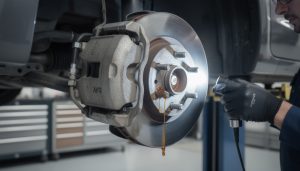
Disconnect the brake fluid line by unscrewing the banjo bolt carefully while placing the tube end into a container to catch fluid. Avoid pushing the brake pedal to prevent introducing air into the system. Remove the mounting bolts holding the caliper and gently take the caliper off the rotor.
Preparing and Installing the New Caliper
Compress the new caliper piston with the brake turning tool until fully retracted. Attach the brake line but do not tighten completely yet. Fit new brake pads into the caliper slides, then align the caliper onto the rotor. Replace and tighten caliper mounting bolts, ensuring all bolts and fittings are lightly oiled to prevent future seizing.
Bleeding the Brakes
Verify that the master cylinder reservoir is full with fresh brake fluid. Attach rubber tubing to the caliper’s bleeder valve, then ask an assistant to press and hold the brake pedal while you open the valve to release air bubbles. Close the valve once clean fluid flows, and top off the reservoir as necessary.
Final Checks and Road Test
Reinstall the wheel, tighten the lug nuts to specification, lower the vehicle, and perform a gentle test drive to confirm effective brake response without pulling, noise, or unusual pedal feel.

Consequences and Risks of Ignoring a Faulty Brake Caliper
Failing to address brake caliper problems promptly can escalate minor issues into serious safety hazards. A malfunctioning caliper directly impacts the even distribution of braking force leading to:
- Vehicle pulling to one side when braking, causing handling instability
- Premature wear of brake pads and discs, increasing repair expenses
- Overheating brake components, potentially warping rotors or damaging bearings
- Brake fluid leakage, resulting in drop in hydraulic pressure and brake failure
Moreover, a stuck caliper can make your car difficult to maneuver safely, particularly in emergencies, increasing accident risk. This component’s failure is critically evaluated during MOT inspections in many countries, including the UK. Indeed, brake caliper problems can cause a vehicle to fail its roadworthiness tests due to uneven braking or fluid leaks.
💡 Expert Tip: Never delay brake repairs; immediate brake caliper replacement or repair can spare you from far costlier mechanical and safety consequences down the road.
How to Maintain Brake Calipers and Extend Their Lifespan
A brake caliper generally lasts beyond 100,000 miles if cared for properly. Preventing premature failure requires a combination of routine inspection, cleaning, and maintenance practices.
Some practical steps to maintain your calipers include:
- Regularly inspect brake pads and discs for uneven wear or grooves that indicate caliper issues.
- Flush brake fluid every 1-2 years to eliminate moisture that promotes corrosion and seal degradation.
- Lubricate caliper slides and bolts during brake servicing to prevent sticking.
- Check and replace damaged brake hoses that can cause uneven caliper pressure.
Do not feel compelled to replace all four calipers simultaneously unless paired failure or severe corrosion occurs. Usually, replacing only the faulty caliper suffices, but for high-mileage vehicles or consistent wear, replacing calipers in pairs per axle assures balanced performance.
| Maintenance Task | Frequency | Purpose |
|---|---|---|
| Brake fluid flush | Every 12-24 months | Prevents moisture-related corrosion and maintains hydraulic efficiency |
| Caliper slide lubrication | During every brake pad replacement | Ensures smooth pad movement and prevents sticking |
| Brake hose inspection | Every 6 months | Detects cracks, leaks, and blockages affecting fluid flow |
| Pad and disc check | Every 6 months or 12,000 miles | Monitors wearing patterns indicating caliper condition |
Staying ahead of car braking issues will save money and keep you safe on the road. For additional detailed assistance, especially if you own a specific model like the BMW X4, consider checking reported car issues at reliable automotive resources.
Can I drive safely with a bad brake caliper?
It is unsafe to continue driving with a faulty brake caliper. While minor issues might seem manageable temporarily, caliper failure can quickly escalate and severely impair your vehicle’s braking ability, increasing accident risk.
How often should I inspect my brake calipers?
Brake calipers should be inspected every six months or during brake pad replacements. Regular inspection helps detect early signs of wear, sticking, or leaks that can compromise braking performance.
Do all brake calipers need to be replaced at the same time?
Not necessarily. Usually, only the faulty caliper needs replacement. However, replacing calipers in axle pairs can be beneficial for maintaining balanced brake performance, especially in high-mileage vehicles.
What is the average cost of brake caliper replacement?
Brake caliper replacement costs typically range between £150 and £500 per caliper, including parts and labor. Costs vary depending on vehicle model and whether the work is DIY or professional.
Is a faulty brake caliper an MOT failure?
Yes, brake caliper problems such as fluid leaks, uneven braking, or caliper seizure are likely to result in an MOT failure as they critically affect vehicle safety.