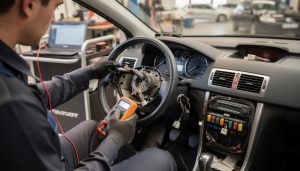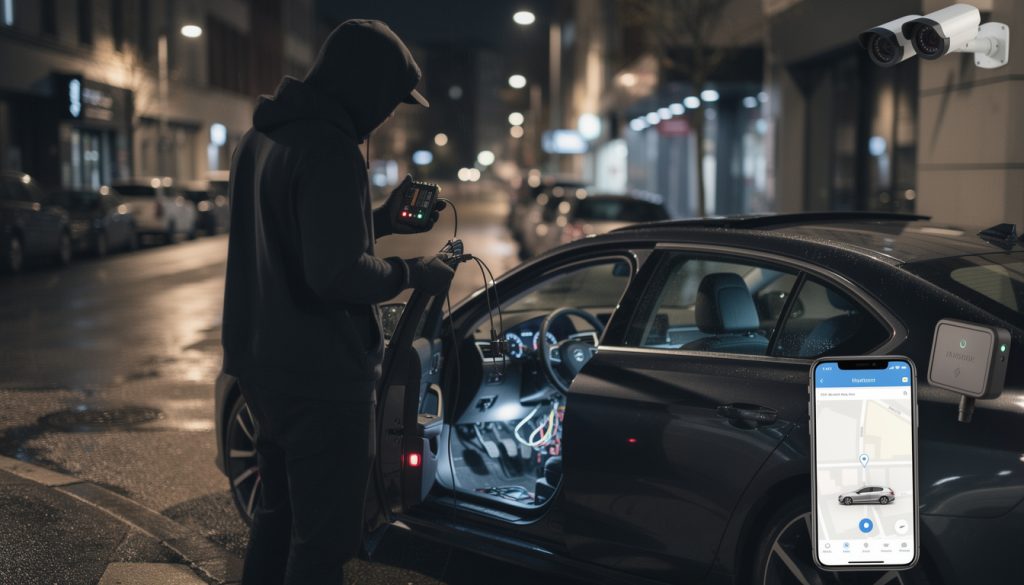
Modern car thieves have evolved far beyond the days of smashing windows and hot-wiring vehicles. With the advancement of vehicle security systems, car thieves now employ sophisticated techniques such as key fob cloning, signal jamming, and cyber-attacks to bypass anti-theft technology. Understanding the methods thieves use is crucial for every car owner aiming to prevent car theft and protect their vehicle from security breaches.
Key Takeaways :
- Car thieves exploit vulnerabilities in keyless entry systems using signal boosters and cloning devices.
- Signal jamming prevents cars from locking properly, leaving them exposed despite apparent security.
- Immobiliser defeat techniques enable thieves to bypass critical vehicle protection measures.
- Cyber-attacks can hijack vehicle navigation and control systems, posing emerging threats.
- Proactive owner vigilance and using Faraday cages for key fobs are effective preventive actions.
How Car Thieves Use Key Fob Cloning to Overcome Vehicle Security
One of the most alarming techniques car thieves utilize today is key fob cloning. Unlike traditional theft methods that required physical access to the ignition system, cloning targets the electronic signals between your key fob and vehicle. If a thief manages to clone your key fob, they essentially gain the ability to unlock and start your car without the original key.
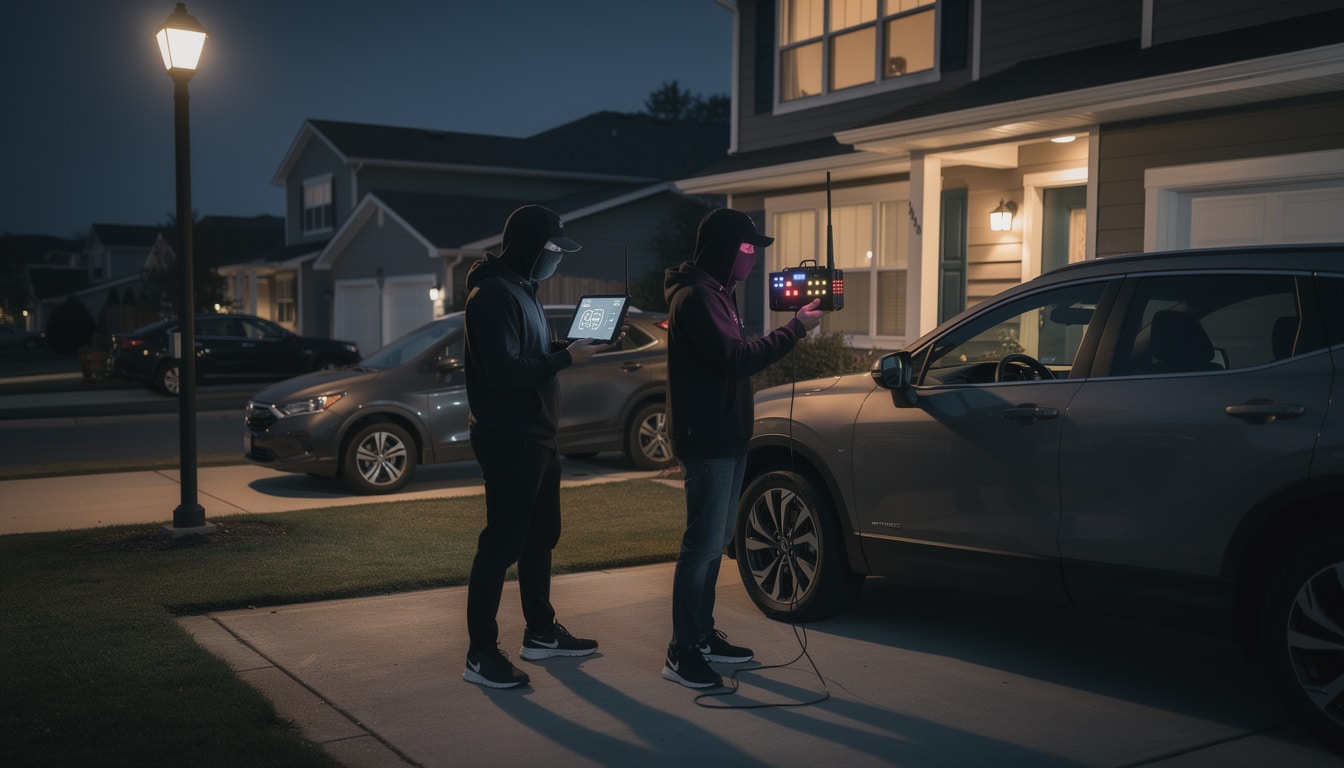
The process begins by capturing the radio frequency signals your key fob sends to the car. These signals are designed to authorize entry and engine start. Skilled thieves often use signal boosters or relay devices placed near your home—sometimes just outside the front door—to amplify your key fob’s signal. This tricks the car into thinking the key is inside or near the vehicle.
Once the key fob’s signal is intercepted, thieves use cloning tools or online guides—which are controversially accessible—to replicate your key’s electronic signature. Even locksmith security systems are being targeted today as thieves try to obtain cutting-edge key duplication tools. The risk is especially high for vehicles with keyless entry vulnerability, a segment continuously exploited to bypass standard vehicle protection.
How to Protect Your Vehicle Against Key Fob Cloning
- Store your key fob in a Faraday cage or signal-blocking pouch: These containers block electromagnetic signals, preventing thieves from amplifying or detecting your fob’s frequency.
- Avoid leaving your key fob near the house entrance: Moving your keys deep inside your home reduces the effectiveness of signal boosting.
- Consider upgrading your vehicle’s software: Manufacturers often release patches that strengthen encryption protocols.
- Disable keyless entry features when not needed: Some vehicles allow you to deactivate keyless start modes temporarily.
💡 Expert Tip: Storing your key fob in the freezer might provide limited signal damping, but a Faraday cage is the only reliable method to fully block signal relay attacks.
Signal Jamming: The Silent Threat in Vehicle Security
Signal jamming is an increasingly popular tactic among car thieves, where electronic devices transmit signals that interfere with your wireless key fob. The consequence is that when you press the lock button, the car actually never receives the command, and remains unlocked—unbeknownst to you. This silent breach can leave your vehicle wide open, inviting easy theft without alarm triggers.
These jammers are alarmingly affordable, available for around $40, and compact enough to be concealed in a thief’s pocket or backpack. Urban centers have seen a spike in this crime, with reports from cities like Manchester alerting the public to be more vigilant. In fact, vehicles left in busy parking areas or outside apartments are prime targets since thieves capitalize on chaos and inattentiveness.
Even hearing the familiar sounds of locks clicking doesn’t guarantee your car is locked when jamming is active. The technology tricks the fob and user alike by preventing the lock signal from reaching your vehicle’s onboard computer.
Actions to Detect and Prevent Signal Jamming
- Physically check all doors and trunk before walking away: Don’t rely solely on the audible lock sounds—grab handles to ensure the doors have engaged.
- Use mechanical locks for added protection: Steering wheel or handbrake locks act as strong deterrents against opportunistic thieves.
- Park in well-lit, high-visibility areas: Surveillance cameras and natural vigilance reduce jamming success rates.
- Install advanced car alarms with movement sensors: These systems can alert you even if doors remain unlocked.
💡 Expert Tip: Never assume your car has locked just because the key fob responded. Make it a habit to check manually, especially in high-risk areas.

Defeating Immobilisers and Its Impact on Vehicle Protection
Immobilisers form the backbone of modern anti-theft technology. They prevent the engine from starting without the correct transponder key present. However, hackers and thieves have discovered methods to bypass these immobilisers, often by intercepting and decoding the communication signals between your car and key.
Vulnerabilities in commonly used immobiliser chips allow criminals to record and break the encryption within as little as 30 minutes. By listening to two distinct signals during communication exchanges, thieves can replicate the security code, disable the immobiliser, and gain unauthorized engine control.
This security breach can have serious consequences, especially with high-end models featuring expensive electronic control units (ECUs). Repairs after such breaches typically cost between $1,000 and $3,500 depending on damage severity and parts replaced. The immobiliser defeat is not widespread but growing, particularly targeting older or mid-range models with known chipsets vulnerable to hacking.
Preventative Measures to Secure Your Immobiliser
- Research if your vehicle’s immobiliser chip is at risk: Simple online searches can identify if your make and model are affected by known vulnerabilities.
- Be vigilant in residential areas: Thieves tend to operate around neighborhoods where they can linger undetected while capturing signals.
- Update your vehicle’s software regularly: Dealers often issue updates that patch known security holes.
- Supplement immobilisers with physical deterrents: Utilize steering wheel locks or kill switches for extra defense.
💡 Expert Tip: High-tech immobiliser hacks rely on intercepted signals, so secure your vehicle’s proximity by avoiding leaving your keys unattended in easily accessible spots.
Emerging Cyber Threats: Taking Over Your Car’s Digital Systems
With the surge of connected and self-driving vehicles, car hacking has become a looming threat. Some criminals have demonstrated the ability to hijack a car’s remote navigation and control systems using digital broadcasts like DAB radio signals. This form of intrusion goes beyond merely stealing a car—it involves taking direct control of its operation remotely.
Such cyberattacks are still rare but could become common as more vehicles integrate complex onboard networks and autonomous modules. The risk extends to carjacking scenarios, where criminals could force occupants to drive to secluded locations before theft—blending physical crime with cyber technology.
The challenge for vehicle manufacturers is enormous: balancing convenience features with security. Each new connected feature introduces potential entry points for hackers, making constant security evolution essential.
Strategies to Mitigate Cybersecurity Risks in Modern Vehicles
- Research vehicle security ratings before purchase: Avoid models with known digital vulnerabilities.
- Keep software and firmware up to date: Manufacturers release cybersecurity patches critical to blocking exploits.
- Limit use of remote control features: Disable functions that aren’t frequently used, such as remote start or navigation commands.
- Consider aftermarket cybersecurity solutions: Specialized vehicle firewalls and intrusion detection can provide extra layers of protection.
💡 Expert Tip: Consult with your dealership or vehicle manufacturer about ongoing cybersecurity support for your car, especially if it features autonomous or connected technologies.

Top Practical Tips to Prevent Car Theft and Secure Your Vehicle
After analyzing the evolving techniques used by car thieves, it’s clear that no single security method is foolproof. However, combining multiple layers of vehicle protection drastically reduces the risk of a security breach. Below is a consolidated list of effective practices you can implement immediately:
- Store keys in Faraday cages to block signal theft.
- Physically verify that your car locks after using the key fob to avoid jamming exploits.
- Regularly update vehicle software and immobiliser firmware.
- Use additional physical security devices such as steering wheel locks.
- Park in secure, well-lit areas with surveillance cameras.
- Avoid leaving valuables visible inside the car to deter opportunists.
- Stay informed about your car’s specific vulnerabilities and manufacturer recommendations.
| Security Threat | Technique Used by Thieves | Recommended Prevention | Average Repair Cost (if compromised) |
|---|---|---|---|
| Key Fob Cloning | Signal amplification and cloning devices | Faraday cage key storage, software updates | Variable; key replacement ~ $200 |
| Signal Jamming | Electronic jammers blocking lock signals | Manual door checks, physical locks | Usually no damage; risk of theft |
| Immobiliser Defeat | Signal interception and decoding | Software patches, physical deterrents | $1,000 – $3,500 |
| Car Hacking | Remote control via digital signals (e.g., DAB radio) | Cybersecurity updates, limiting remote features | High, varies widely |
This table highlights the range of techniques used by car thieves and the corresponding protective measures, helping vehicle owners prioritize defenses based on risk and cost.
What is the most common method car thieves use in 2026?
Key fob cloning and signal relay remain the most common techniques due to widespread use of keyless entry systems.
How effective are steering wheel locks against modern car theft?
While not foolproof, physical locks remain strong deterrents that increase the time and effort a thief needs, discouraging opportunistic theft.
Can software updates fully protect my car from hacking?
Software updates greatly reduce vulnerabilities but can’t guarantee full protection. Combining updates with physical measures is best practice.
Are older cars safer from digital car hacks?
Older cars might not have digital entry points but are more vulnerable to traditional theft methods like hot-wiring.
What should I do if I suspect my car’s security has been breached?
Report to the police immediately and consult a professional locksmith or dealer to inspect and secure your vehicle.