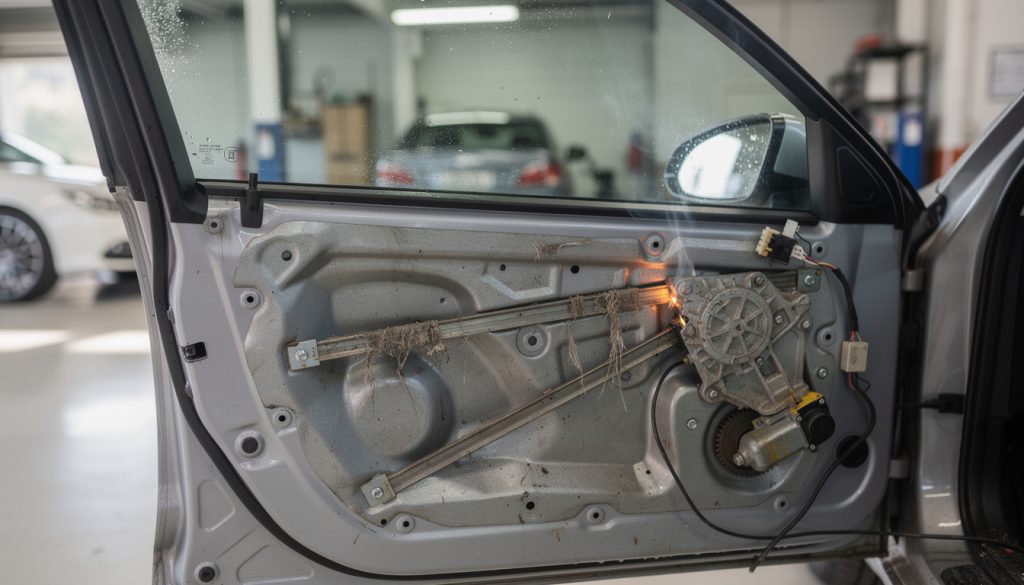
The mechanism behind your car’s window operation is more sophisticated than it looks. Embedded deep within the door panel, the window regulator plays a pivotal role in smoothly raising and lowering your vehicle’s windows. Despite its vital function, this component can suffer from mechanical issues and failure, leading to inconveniences and potential security risks. Understanding the key indicators of a malfunctioning window regulator can save you from costly repairs and unexpected breakdowns. In my experience as a mechanic, early recognition of these symptoms is essential to maintaining your vehicle’s comfort and safety.
Key Takeaways :
- Irregular window movements such as sluggish or overly fast operation often signal window regulator problems.
- Windows falling inside the door panel are a clear sign of regulator failure.
- Unusual noises like grinding or clicking indicate worn gears or cables within the regulator.
- Intermittent button response can denote wiring issues or a faulty regulator system.
- Proper maintenance extends regulator life and prevents premature failure.
Types of Window Regulators and Their Mechanical Differences Affecting Failure Symptoms
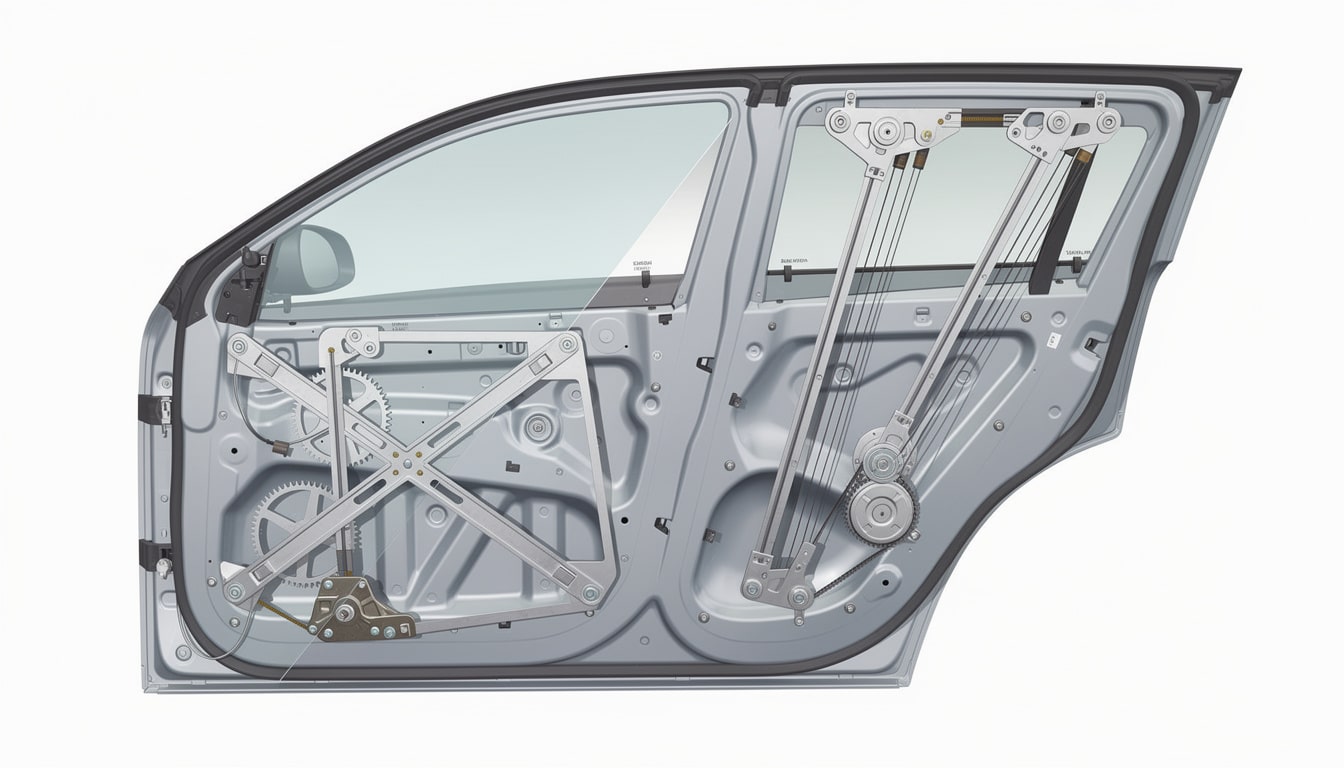
In most vehicles, there are two primary types of window regulators, each with distinct mechanical designs and vulnerabilities influencing how they malfunction. These types are the scissor-type and cable-type regulators.
The scissor-type window regulator resembles a pair of scissors, utilizing linked arms and pivot points to move the glass. Its straightforward design means fewer mechanical parts can wear out, making it generally more reliable over the long term. For instance, many older BMW and Mercedes-Benz models come equipped with this regulator type, which tends to show fewer failure symptoms except in cases of severe damage. However, when scissor regulators fail, it’s often because of bent or broken arms or stripped gears.
Conversely, the cable-type regulator relies on a network of cables and pulleys powered by a small motor. This system is compact but incorporates many moving parts prone to wear. The cables can fray or snap, and pulleys may seize up, causing the window to get stuck or drop suddenly into the door. Modern vehicles, including several Volkswagen and Mitsubishi models, often use this system due to its space-saving benefits, but the increased mechanical complexity raises the likelihood of failure.
Both systems connect to a window motor which powers the entire mechanism. Sometimes the problem lies more with the motor than the regulator itself. For example, faulty window motors can cause sluggish or inconsistent window movement, mimicking regulator failure symptoms. Therefore, distinguishing between motor and regulator failure is a key diagnostic step.
Recognizing the Top Indicators of Window Regulator Malfunction in Power Windows
The window regulator’s malfunction manifests through specific observable symptoms. From experience, recognizing these early signs can prevent the need for extensive repairs or even complete regulator replacement.
1. Slower or faster than usual window movement
The speed at which your window moves gives direct insight into the regulator’s condition. A window moving slower than normal often indicates mechanical strain, typically due to worn gears or cables within the regulator. Alternatively, a window moving too quickly or erratically suggests the regulator is failing to maintain proper control or the motor is providing inconsistent power.
2. Window falling inside the door panel
Probably the most obvious sign of complete regulator failure is a window that drops suddenly inside the door. This typically happens when the cables snap or the supporting mechanisms give way. A window left stuck inside the door not only frustrates day-to-day use but exposes the vehicle interior to weather damage and theft risks.
3. Window won’t stay up
If the window slides down on its own after you raise it, you’re likely facing damaged or malfunctioning regulator components—often frayed cables or worn-out tracks. These mechanical failures compromise the ability of the regulator to keep the window glass securely in place.
4. Tilted or sticking window
A crooked or jammed window suggests misaligned or broken regulators, such as bent rails or snapped cables causing the glass to shift improperly. This can cause permanent damage if left unattended, affecting the sealing and insulation of your car door.
5. Unusual noises during window movement
Grinding, clicking, or rattling noises when you operate the window are classic red flags for gear or cable deterioration. These sounds often precede mechanical failure and should prompt immediate inspection. Ignoring such symptoms can lead to full regulator failure and more costly repairs.
6. Inconsistent power window button operation
When the window switch works intermittently or not at all, it might stem from electrical wiring or switch contact issues. However, a malfunctioning window regulator can sometimes cause the motor to seize, leading to similar button responsiveness problems. Diagnosing these signs early optimizes repair costs and avoids replacement of unrelated parts.

Main Causes Behind Window Regulator Failure and Motor Troubles
Understanding why your window regulator starts malfunctioning helps in diagnosing problems and preventing future ones. The common causes range from regular wear to external damage or misuse.
- Wear and tear: Window regulators contain several moving parts prone to degradation over time. Dust, moisture, and dirt accumulation in the door track accelerate wear and corrosion, especially in climates with drastic seasonal changes.
- Improper use: Repeatedly opening and closing windows, especially by children, puts excessive strain on the mechanism. For example, someone forcing the window against resistance can cause cables to snap or gears to strip prematurely.
- Accidents and impacts: Collisions or hard knocks may bend the regulator arms or damage cables invisibly, leading to a delayed failure even weeks after an accident. Luxury vehicles like Mercedes-Benz S-Class with advanced window mechanisms can suffer expensive repairs due to impact-related issues.
- Electrical problems: Sometimes, diagnosing the cause of power window failure reveals wiring issues or a failing motor rather than the regulator itself. Distinguishing between these is paramount since motor replacement differs vastly in cost and procedure.
Choose repair strategies based on the root cause for better longevity. For example, cleaning the window tracks regularly and avoiding forcing cold, frozen windows can significantly delay regulator failure.
Diagnostic Approach: Differentiating Between Faulty Window Regulator and Motor Issues
When a car window shows malfunctioning behavior, pinpointing the root cause can save considerable effort and expense. Here’s how I usually diagnose whether the regulator or window motor is at fault.
The first step is to try moving the window manually when possible. If the glass moves smoothly and without much resistance, but the motor isn’t responding, then the problem likely lies with the motor. However, if the window feels stuck or resistant to movement, the regulator is probably damaged.
Many modern vehicles integrate diagnostic sensors or onboard systems that report window operation faults, but these can be costly to access without proper tools. Thus, mechanical checks remain invaluable.
| Symptom | Likely Cause | Recommended Action | Estimated Repair Cost (USD) |
|---|---|---|---|
| Window stuck or slow movement | Worn gears or cables in regulator | Regulator repair or replacement | $150 – $400 |
| Window falls inside door | Broken cables or support arms | Complete regulator replacement | $200 – $500 |
| Window motor silent or noisy | Motor failure or electrical issues | Motor replacement or wiring check | $100 – $300 |
| Intermittent switch response | Wiring problem or regulator jam | Electrical inspection and cleaning | $50 – $150 |
💡 Expert Tip: Always test manual window movement before replacing parts. A stuck window usually means a faulty regulator, while a freely moving window with no motor response points to a motor issue.
Preventive Measures to Maximize the Lifespan of Your Window Regulator
Maintaining your window regulator is an often-overlooked aspect of vehicle care. Simple habits can 延长 its functionality and save you from untimely failures.
1. Avoid forcing frozen windows: Applying power to frozen windows strains the motor and regulator. Instead, use defrosters and gently free the window before operating.
2. Keep window tracks clean: Regularly clean dust, leaves, and grime from window tracks to reduce wear on cables and gears.
3. Address symptoms promptly: Do not ignore sluggish windows or strange noises. Early intervention can often save the regulator from complete failure.
4. Limit unnecessary window operation: Excessive opening and closing stresses the system. Encourage passengers to avoid overusing power windows, preventing wear from improper use.
5. Use protective treatments: Applying silicone spray on tracks can reduce friction and protect against moisture-related corrosion.
Cars such as the Saab 9-3 and Volkswagen Bora have reported frequent window regulator issues due to mechanical wear and environmental factors, making preventive maintenance even more critical for owners. For a comprehensive overview of these recurring problems, refer to resources like Volkswagen Bora issues and Saab 9-3 problems reliability.
Can a faulty window regulator cause my car door to rattle?
Yes, a damaged regulator can cause vibrations inside the door panel, leading to rattling sounds especially when driving over uneven surfaces.
Is it expensive to replace a window regulator?
Replacement costs vary between $150 and $500 depending on the vehicle model and regulator type.
How can I test if the window motor is working?
Try moving the window glass manually; if it moves easily but the power window doesn’t respond, the motor is likely faulty.
Are window regulator problems common in specific car brands?
Yes, models such as BMW Serie 3 and Mitsubishi Lancer have documented common issues with regulators; check manufacturer-specific reliability reports for details.
What are the risks of ignoring a failing window regulator?
Ignoring it can lead to security vulnerabilities, interior weather damage, and more expensive repairs later.

Keeping a vigilant eye on your window operation and responding to these key indicators of failure ensures smoother rides and fewer emergency trips to the mechanic. Remember, understanding the difference between a window regulator and a window motor malfunction is crucial for accurate and cost-effective repairs.