In the realm of modern automotive engineering, the throttle body plays an integral role in managing engine performance. This component regulates the amount of air entering the engine’s combustion chamber to ensure fuel combusts efficiently in the pistons. Any disruption in this air control system can ripple through your vehicle’s functionality, causing a spectrum of issues often difficult to diagnose without understanding the underlying mechanics. In 2026, as vehicles become more electronically controlled and fuel efficiency remains paramount, recognizing early symptoms indicating the need to clean the throttle body has never been more critical for maintaining reliable, smooth driving experiences.
While the throttle body might not capture attention daily, its health directly affects your car’s ability to accelerate smoothly, idle steadily, and avoid wasting precious fuel. When blocked or fouled, it not only causes poor combustion but can trigger the dreaded Check Engine Light, signaling deeper performance problems. Understanding these warning signals empowers not only professional mechanics but also everyday drivers to act promptly and protect their vehicles from more extensive damage. Here, I delve into the 7 key symptoms that reveal when your throttle body needs cleaning, elaborating on each with practical insights based on today’s automotive technologies.
Key Takeaways:
- Grime accumulation in the throttle body disrupts airflow and combustion efficiency.
- Poor fuel economy often hints at air intake restrictions caused by a dirty throttle body.
- Rough idle and stalling signal airflow inconsistencies disrupting smooth engine operation.
- Delayed or uneven acceleration is a direct effect of insufficient air flow affecting throttle response.
- Check Engine Light illumination frequently associates with throttle body sensor errors caused by dirt.
How Grime and Carbon Build-Up Impact Throttle Body Efficiency
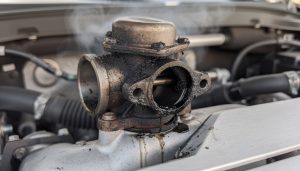
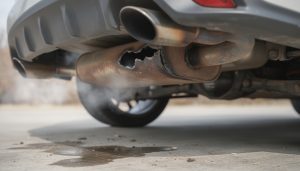
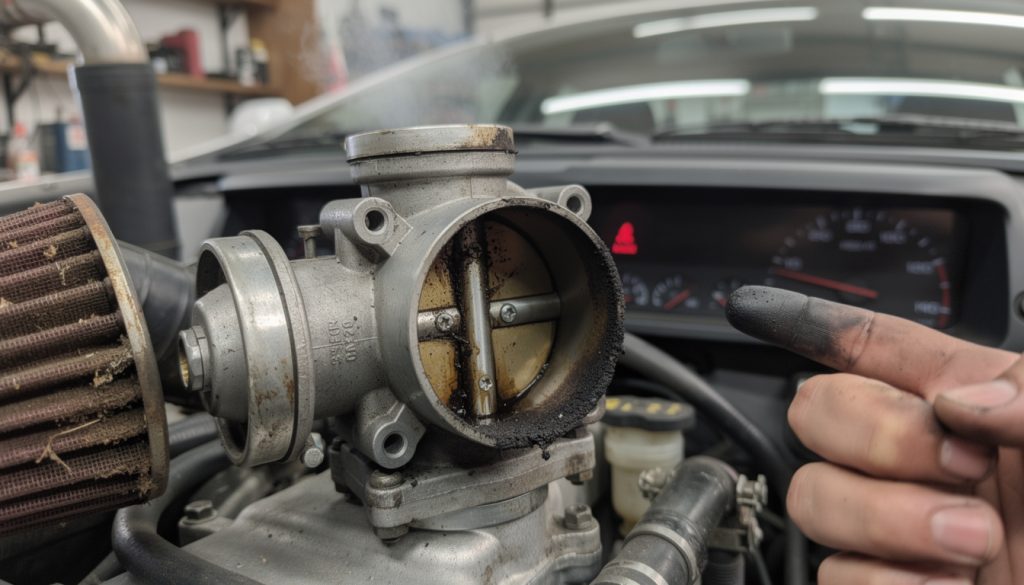
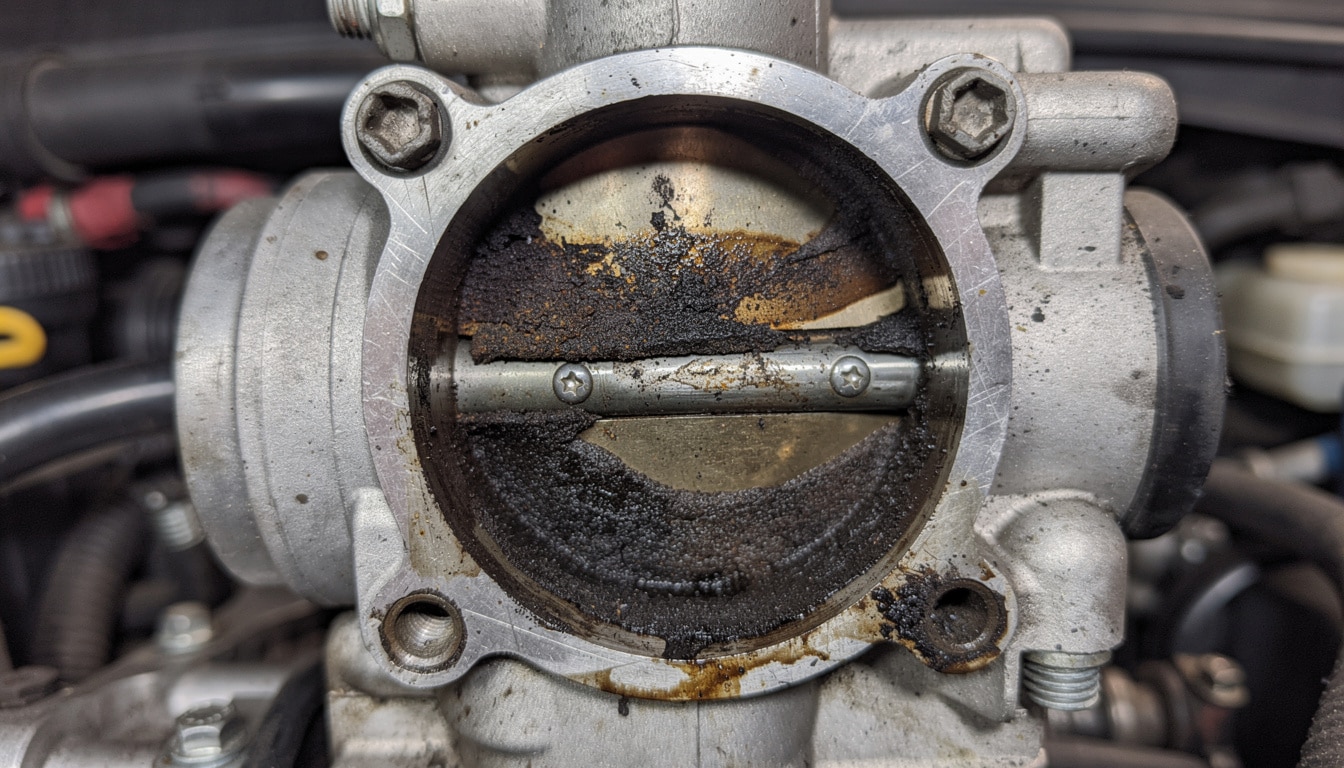
The primary culprit behind impaired throttle body function is the persistent build-up of grime and carbon deposits. As your engine draws air, particles and oily residues accumulate inside the throttle body’s housing. This layer, known technically as “coking,” forms a rough surface that disrupts the smooth flow of air. Given that modern fuel-injected cars rely on precise air-to-fuel ratios, even small obstructions can distort the mixing process. This disruption leads to engine hesitation during acceleration and may cause incomplete fuel combustion, contributing to black smoke emissions visible from the exhaust.
When grime layers thicken, the throttle plate — the valve regulating airflow — can stick, causing erratic behavior in airflow delivery. This irregularity is not merely theoretical; many drivers report feeling their vehicles lurch unpredictably or struggle to reach expected speeds, hallmark signs of throttle body inefficiency. Furthermore, these deposits interfere with electronic throttle position sensors, which supply critical data to the engine control unit (ECU). Consequently, false readings generate unnecessary corrections that degrade the overall throttle response.
The importance of maintaining a clean throttle body extends beyond mechanical efficiency; it also prevents long-term damage to engine components. Left untreated, the dirt buildup causes uneven wear on parts, potentially resulting in costly replacements. For example, owners of vehicles with known throttle-related issues, such as certain Mitsubishi Lancer models, may want to regularly inspect throttle body conditions to avoid recurring malfunctions that disrupt daily driving.
Poor Fuel Economy and Its Connection to Throttle Body Cleanliness
Monitoring your car’s fuel economy provides an accessible way to detect throttle body problems before costly repairs become necessary. The throttle body’s role in controlling the volume of air reaching the combustion chamber means any clogging can lead to a rich or lean air-fuel mixture. This imbalance directly influences how much fuel your engine consumes, often reducing fuel efficiency by 10-15% or more. For example, if after filling up your tank and resetting the trip meter, your average miles per gallon fall short of regular values, a clogged throttle body could be the underlying cause.
Such inefficiency results from incomplete combustion caused by restricted air intake. In practical terms, your vehicle might require more fuel to maintain the same output, pushing your operating costs higher. Some drivers notice frequent visits to the fuel station as a result, while others observe fluctuating mileage without apparent reason. Diagnosing throttle-related fuel inefficiency early helps restore balance to your engine’s air-fuel mixture and improves overall performance.
For informed vehicle owners, tracking fuel economy fluctuations alongside other symptoms like rough idle or delayed throttle response sharpens diagnostic precision. When these symptoms combine, it strongly points toward throttle body cleaning or professional inspection. It’s also worth noting that a clean throttle body supports compliance with emission norms by promoting complete fuel burn, helping avoid regulatory issues in many regions.
Recognizing Rough Idle and Stalling as Indicators of Throttle Body Issues
One of the most apparent symptoms of throttle body contamination is a rough or unstable idle. Drivers often experience this as irregular engine speed when the car is stationary, with RPMs fluctuating unpredictably. In some cases, the vehicle might stall shortly after starting or when coming to a complete stop, which compromises safety and drivability. These symptoms arise because dirt disturbs the delicate airflow the engine relies on to maintain consistent combustion at low speeds.
Delving deeper, the throttle body is designed to modulate air precisely in response to accelerator pedal movements. When dirty, it cannot respond smoothly, resulting in jerky idling behavior. Additionally, modern cars often enter a reduced power mode—a kind of limp state—if the throttle position sensor detects anomalies caused by grime interference. This mode prevents engine damage but limits vehicle speed, frustrating drivers unaware of the throttle’s role.
In practice, owners may notice difficulties maintaining engine idle during traffic stops or feel the engine hunt for stability. Occasionally, this is accompanied by unusual noises or vibrations under the hood. Proper throttle body cleaning restores steady pressure and airflow, thereby smoothing out engine idle and reducing risk of unexpected stalls.
Uneven Acceleration and Poor Throttle Response Explained
Your vehicle’s ability to accelerate evenly and predictably hinges on the throttle body’s precision in controlling air intake. When it’s dirty, acceleration becomes hesitant or sluggish, a sensation often described as the car struggling to “catch up” with the driver’s input. This uneven acceleration may manifest as a lag before the engine responds or as sudden jolts when the speed rises abruptly—clear signs throttle body cleaning is overdue.
Throttle body contamination creates pockets of turbulent airflow, starving the engine of the necessary air volume to mix cleanly with fuel. This is especially noticeable during rapid throttle applications, such as merging onto highways or overtaking slower vehicles. As acceleration deteriorates, drivers may mistakenly believe the issue lies in fuel delivery or transmission, resulting in unnecessary repairs unless throttle body inspection is prioritized.
In complex power management systems, sensor errors related to throttle cleanliness can further muddle acceleration dynamics, sometimes triggering the Check Engine Light. Mechanically, the throttle plate may stick slightly due to accumulated deposits, physically blocking proper valve movement. Electronic throttle bodies particularly depend on sensor accuracy, making cleanliness essential.
For more details on vehicles prone to throttle body malfunctions and how to address these symptoms, see this resource on common Mitsubishi Lancer issues where throttle body faults frequently contribute to poor driving experiences.
Electrical and Sensor Problems Triggered by Throttle Body Contamination
Modern vehicles rely heavily on electronic controls to manage fuel injection and throttle operation. The throttle body incorporates sensors that relay real-time data to the engine management system. When dirt or grease obscures these sensors, inaccurate signals may prompt incorrect adjustments in the air-fuel mixture, adversely impacting engine performance.
Common electrical symptoms linked to throttle body dirt include erratic idling, spontaneous engine hesitation, and activation of the Check Engine Light. In some scenarios, the vehicle’s computer places the engine in a precautionary limited power mode to protect internal components, noticeably affecting acceleration and drivability. These electronic glitches often confuse drivers, since the root cause isn’t immediately obvious without proper diagnostics.
Cleaning throttle body sensors demands care, as harsh chemicals or improper handling can further damage sensitive electronics. Certified mechanics usually recommend specialized cleaning agents designed for automotive sensors. For DIY enthusiasts, consulting the owner’s manual to identify throttle type—mechanical or electronic—is crucial for safe maintenance.
💡 Expert Tip: Regularly inspect and clean throttle body sensors every 30,000 miles to prevent cumulative sensor malfunctions that deteriorate engine control precision.
How to Identify When It’s Time to Clean or Replace Your Throttle Body
Recognizing throttle body problems early allows you to restore your vehicle’s functionality before performance worsens or expensive repairs arise. After observing any combination of the discussed symptoms—ranging from rough idle, stalling, sluggish acceleration, to illuminated warning lights—the immediate step is a visual examination of the throttle body housing. Visible dirt or carbon deposits signal the necessity for cleaning.
Understanding the style of your throttle body system matters. Mechanical throttle bodies, often found on older models, allow more straightforward cleaning with the right tools and materials. Electronic throttle bodies, common in newer vehicles, require professional inspection due to the complexity of integrated sensors.
Should cleaning fail to resolve symptoms or if the component shows signs of mechanical wear or sensor failure, replacement becomes the next logical solution. Throttle body replacement ranges from economical to moderate costs depending on vehicle model and part availability but is preferable to enduring persistent engine issues.
In all situations, addressing throttle body cleanliness and functionality offers significant benefits: enhanced throttle response, improved fuel consumption, reduced emissions, and safer driving conditions. Moreover, routine inspection complements regular vehicle maintenance schedules, ensuring longevity and dependable operation.
| Symptom | Cause | Resulting Problem | Suggested Action |
|---|---|---|---|
| Grimy throttle body | Carbon build-up and dirt | Disturbed airflow and slow acceleration | Throttle body cleaning |
| Poor fuel economy | Restricted air flow | Increased fuel consumption | Clean throttle body and monitor |
| Rough or high idle | Unstable air intake | Stalling and jerky idle | Throttle body servicing |
| Uneven acceleration | Throttle plate sticking | Delayed speed gain | Throttle body inspection |
| Sensor faults | Dirt on electronic sensors | Power loss and warning lights | Professional cleaning or replacement |
What causes a throttle body to get dirty?
Throttle bodies accumulate dirt and carbon deposits over time due to air contamination and fuel residue, which disrupt airflow and sensor function, leading to performance issues.
Can I clean my throttle body myself?
If your vehicle has a mechanical throttle body, cleaning it yourself is possible using appropriate sprays and tools. For electronically controlled throttle bodies, it’s safer to consult a professional to avoid sensor damage.
What are the risks of ignoring throttle body maintenance?
Ignoring throttle body cleaning can cause persistent engine hesitation, reduced fuel efficiency, increased emissions, and potential engine stalling, which may result in costly repairs.
How often should I inspect or clean my throttle body?
A general recommendation is to inspect and clean the throttle body every 30,000 miles or as soon as you notice symptoms like rough idle, poor acceleration, or the Check Engine Light activates.