Timing belt issues are among the most critical yet overlooked problems in car maintenance. Ignoring the state of your timing belt can cause severe engine failure, leading to expensive repairs or even total engine replacement. As vehicles in 2026 become more advanced, ensuring the integrity of the timing belt remains crucial for reliable engine performance and longevity. Recognizing early warning signs lets you act promptly and avoid unexpected breakdowns on the road.
Key Takeaways :
- Your car’s timing belt synchronizes essential engine components.
- Regular preventive maintenance, including timing belt replacement, is vital.
- Ignoring warning signs can lead to catastrophic engine failure.
- Common symptoms include unusual car noise, difficulty starting, and engine misfiring.
- Quick identification and repair save money and prolong engine life.
Understanding the Crucial Role of the Timing Belt in Car Maintenance and Engine Performance
The timing belt, often referred to as the cam belt, is a key player in your car’s engine. It ensures precise synchronization between the camshaft and crankshaft, which orchestrates the opening and closing of the engine’s valves in perfect harmony with piston movements. This synchronization guarantees optimal combustion cycles, vital for smooth engine performance and efficiency.
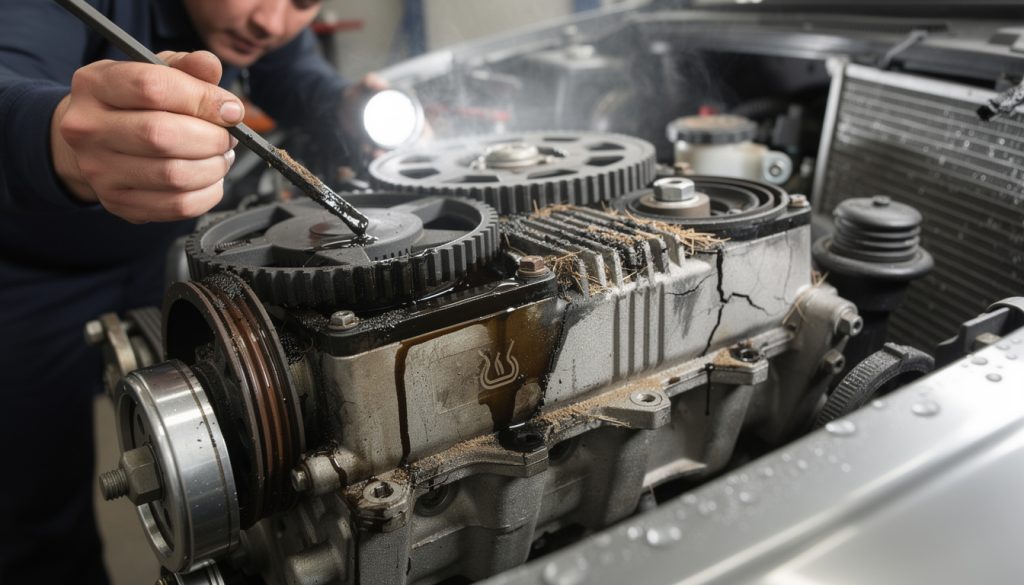
Typically located beneath a timing cover on the front or side of the engine, the timing belt is crafted from durable synthetic rubber combined with nylon fabric. Its grooved design keeps it in place, preventing slippage. However, despite its durability, daily driving exposes the belt to constant mechanical stress, heat, and friction. Over time, this leads to belt wear and potential material degradation.
The importance of the timing belt cannot be overstated. Failure results in the loss of engine timing and can cause pistons and valves to collide, a mechanical failure seriously damaging the engine’s internals. This risk makes timing belt replacement a priority during scheduled vehicle inspections, guarding against costly engine repairs.
Some modern engines use timing chains instead, which generally last longer and exhibit less frequent problems. However, chains too can suffer from wear over extended mileage or poor maintenance. Regardless of the system type, understanding your vehicle’s needs through the owner’s manual is essential to ensure appropriate care.
💡 Expert Tip: Always cross-check the recommended service interval for your car's timing belt since skipping or delaying replacement directly increases the risk of severe engine damage, often resulting in failure beyond repair.
Identifying 13 Key Warning Signs Your Timing Belt May Fail Soon
Early detection of timing belt failure signs can save you from unexpected breakdowns and expensive repairs. Here are the most common symptoms you should know, keeping a close eye especially if two or more appear simultaneously:
- Unusual car noise: High-pitched squeals, grinding, rattling, hissing, or even ticking sounds from the engine can indicate slipping or deterioration of the belt. In damp weather, these noises often worsen, hinting at moisture affecting the belt’s grip.
- Difficulty starting the engine: If your starter motor engages but the engine refuses to start or cranks without firing, it is a probable sign that the timing belt has snapped, desynchronizing the camshaft and crankshaft.
- Irregular engine revs: A loose timing belt may slip irregularly, creating unstable engine rev behavior between 2000 and 4000 RPM, often noticeable when accelerating or maintaining speed.
- Engine misfiring: The cam belt controls the firing sequence. When worn, it can cause valves to open or close out of time, resulting in uneven combustion, reduced power, and potential engine damage.
- Oil leaks near the timing cover: Leaky oil in the vicinity of the timing belt cover often points to belt seal problems or damage to the belt assembly, requiring immediate inspection.
- Sudden drop in oil pressure: Belt failure can produce fragments that contaminate oil flow, reducing oil pressure significantly, which threatens engine lubrication and can lead to overheating or seizure.
- Excessive heat and vibrations: Faulty tensioners or belt alignment flaws create abnormal engine vibrations and heat buildup, reducing engine efficiency and lifespan.
- Increased exhaust emissions: Failing belts cause inefficient combustion, pushing your engine to work harder and discharge excessive exhaust gases, sometimes triggering check engine warnings.
- Rough or erratic idling: Loss of belt teeth or slippage can result in stuttering or spluttering during idle, a clear sign the belt is wearing thin.
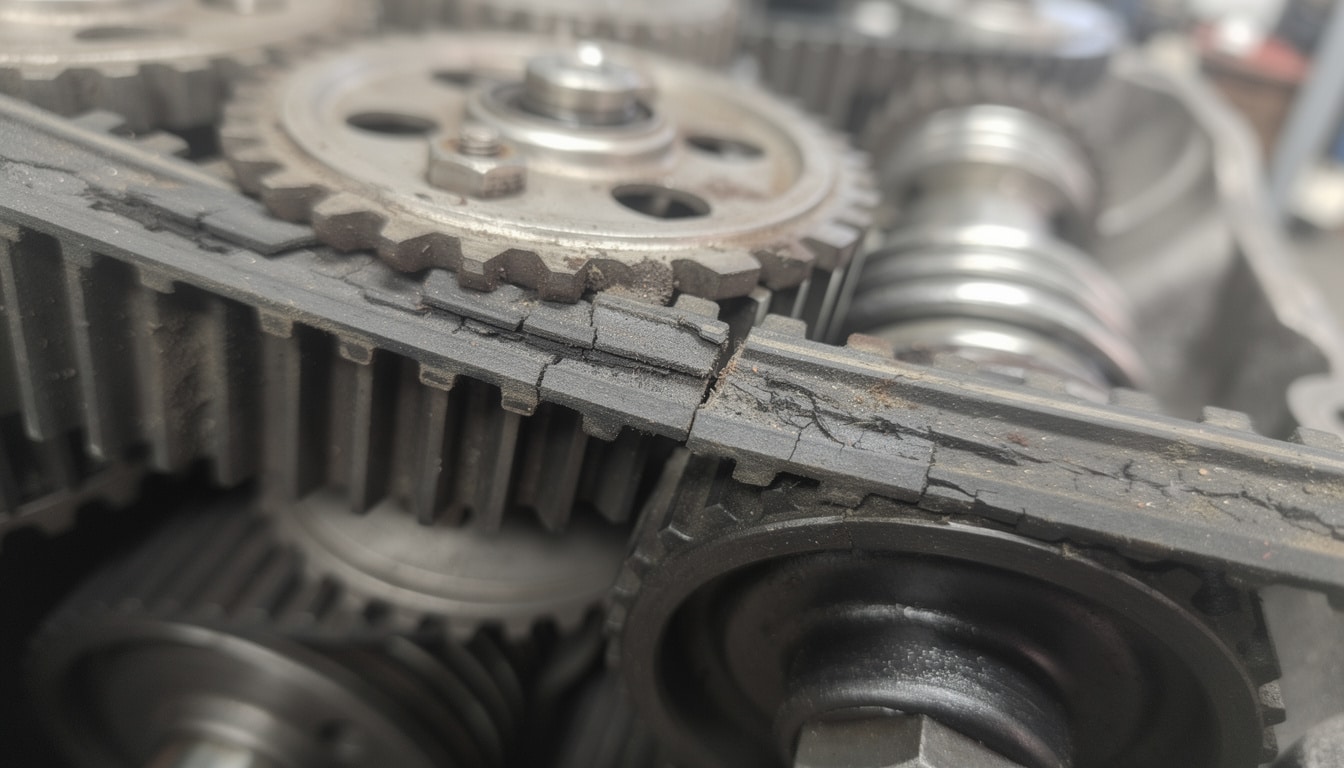
- Visible belt damage: Inspecting the belt reveals glazing (shiny hardened rubber), cracks, fraying, or missing teeth; any of these signs necessitate prompt replacement to avoid imminent failure.
- Engine failure: The most severe sign is a sudden engine shutdown caused by timing belt breakage, which almost always demands professional recovery and repair.
- Damaged pistons and valves: A catastrophic belt failure misaligns the cam and crankshafts, causing pistons to collide with valves. This results in bent valves and broken pistons, often requiring a complete engine rebuild or replacement.
- Warning lights on the dashboard: Modern vehicles alert drivers with specific engine or service warnings that may point to timing belt issues, emphasizing the need for immediate diagnosis.
Early and regular vehicle inspection for these symptoms will protect your car from failing catastrophically and keep your engine running smoothly for years to come.
Optimal Timing Belt Replacement Intervals and Preventive Maintenance Strategies
Every vehicle manufacturer provides a recommended interval for timing belt replacement, commonly within every 4 to 5 years or approximately 60,000 miles depending on the model and driving conditions. Adhering to this schedule is paramount to avoiding premature belt failure and subsequent engine damage.
Preventive maintenance is not just about replacing the belt timely; it involves comprehensive vehicle inspections focusing on belt wear signs and related components such as tensioners, pulleys, and seals. For example, manufacturers like those producing the Peugeot 308 often advise particular attention to timing components due to known wear patterns documented in technical bulletins.
During timing belt replacement, mechanics typically inspect and possibly replace related parts to ensure full system reliability. Neglecting these components may cause secondary failures shortly after belt replacement, incurring avoidable costs.
Regular service visits provide early detection opportunities of subtle problems manifesting as minor noises or changes in engine behaviour. Addressing these in time prevents costly repairs and maintains strong engine performance.
A detailed maintenance checklist for timing belt systems may include:
- Visual inspection of belt surface condition
- Checking belt tension and alignment
- Assessing condition of timing tensioners and pulleys
- Monitoring for oil leaks or contamination near belt area
- Evaluating engine performance for irregularities in idling or revving
💡 Expert Tip: For those driving models like the BMW Series 2, familiarizing yourself with specific timing belt issues shared in community forums and manufacturer recalls can optimize your preventive approach.
Ignoring preventive advice or pushing replacement past recommended intervals is a common mistake leading to severe engine failure, often reported in vehicles across different brands from Audi to Land Rover Discovery Sport.
Technical and Practical Guidance to Inspect and Diagnose Timing Belt Problems
Proper timing belt inspection can be carried out with simple tools and a careful eye during routine vehicle inspection or when unusual engine symptoms arise. Here’s a step-by-step approach to effectively inspecting your belt system:
- Ensure the engine is cool before starting inspection to prevent burns.
- Remove the timing belt cover using appropriate tools to expose the belt.
- Check for visible signs of damage including cracks, glazing, and missing teeth.
- Assess belt tension by pressing on the midpoint of the span; an overly loose or excessively tight belt indicates tensioner issues.
- Examine the condition of tensioners and pulleys for wear or noise when manually rotated.
- Look for oil contamination or leaks that could degrade belt material.
- Start the engine and listen carefully for unusual sounds associated with belt slip.
If any irregularities arise, such as car noise unlike the usual engine hum or difficulty starting, schedule immediate professional inspection and avoid driving extensively.
While inspecting yourself is helpful, remember that certain faults require diagnostic tools or mechanical expertise. A visit to a mechanic ensures thorough vehicle inspection, often complemented by computerized diagnostic equipment capable of reading engine timing irregularities.
💡 Expert Tip: Never ignore a squealing noise after a recent timing belt replacement since it may simply require tension adjustment instead of immediate replacement, saving you unnecessary costs.

How to React If Your Timing Belt Breaks and Avoid Further Damage
Sudden timing belt failure is a serious emergency demanding immediate, cautious action. The moment you suspect or confirm that the timing belt has broken:
- Stop driving immediately. Continuing to operate the vehicle with a snapped belt risks catastrophic internal engine damage.
- Turn off the engine. This prevents pistons from continuing to move out of sync and damaging valves.
- Call a professional mechanic or tow service. Driving the car further to a repair shop can worsen the situation.
- Obtain a full engine inspection. Damage caused by a broken belt may require repairs ranging from belt and component replacement to complete engine rebuild.
Many drivers underestimate the severity of timing belt failure consequences. Broken pistons and valves can cost thousands to repair or replace. By halting vehicle operation immediately, you reduce these risks significantly.
In vehicles like the Audi A5, reports frequently highlight how missed timing belt replacement deadlines lead to expensive engine failures, validating the importance of preventive maintenance.
| Action | Reason | Expected Outcome |
|---|---|---|
| Immediate engine shutdown | Prevent pistons colliding with valves | Reduce engine damage and repair costs |
| Call professional service | Ensure proper diagnosis and repair | Safe recovery and accurate estimate of repairs |
| Do not attempt to restart the vehicle | Avoid additional internal damage | Protect engine components integrity |
How often should I replace my car’s timing belt?
Most car manufacturers recommend changing the timing belt every 4 to 5 years or around 60,000 miles, but checking your owner’s manual is essential to follow your specific car’s maintenance schedule.
Can I continue driving if I hear squealing noises from the engine?
Squealing noise can indicate a slipping timing belt or a tension issue. It’s advisable to have the belt inspected promptly, as continued driving may worsen the damage.
What happens if the timing belt breaks while driving?
A broken timing belt immediately desynchronizes engine components, potentially causing pistons to collide with valves and resulting in severe engine damage. You should stop driving immediately and have the vehicle towed.
Are timing chain problems common compared to timing belt failures?
Timing chains usually last longer than belts and are less prone to wear, but they also can fail eventually due to tensioner wear or insufficient oil supply. Regular maintenance remains crucial.
What are common signs that a timing belt is wearing out?
Signs include unusual engine noises, oil leaks near the timing cover, engine misfiring, irregular engine revs, visible wear such as cracks or missing teeth on the belt, and increased exhaust emissions.