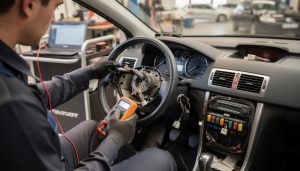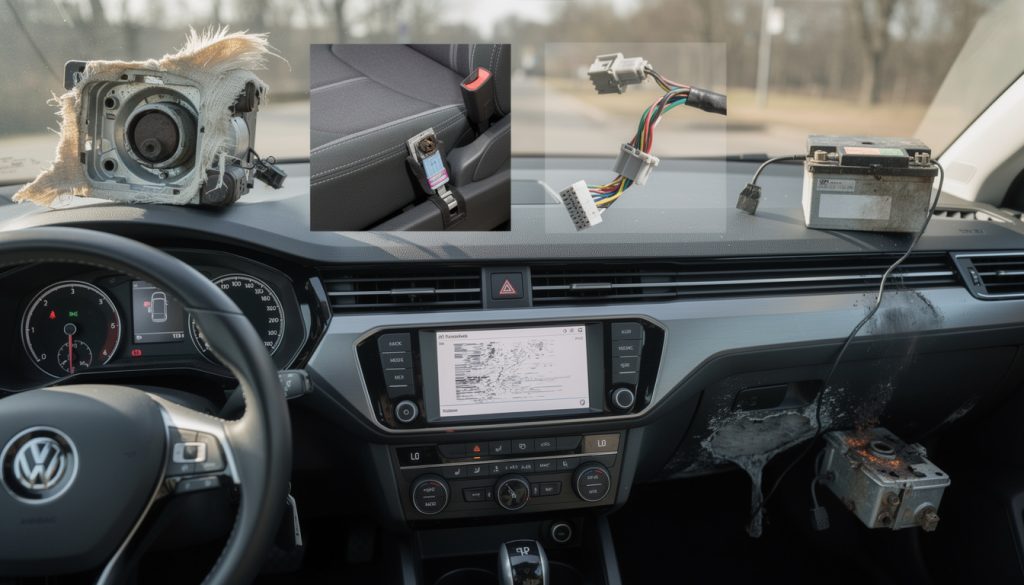
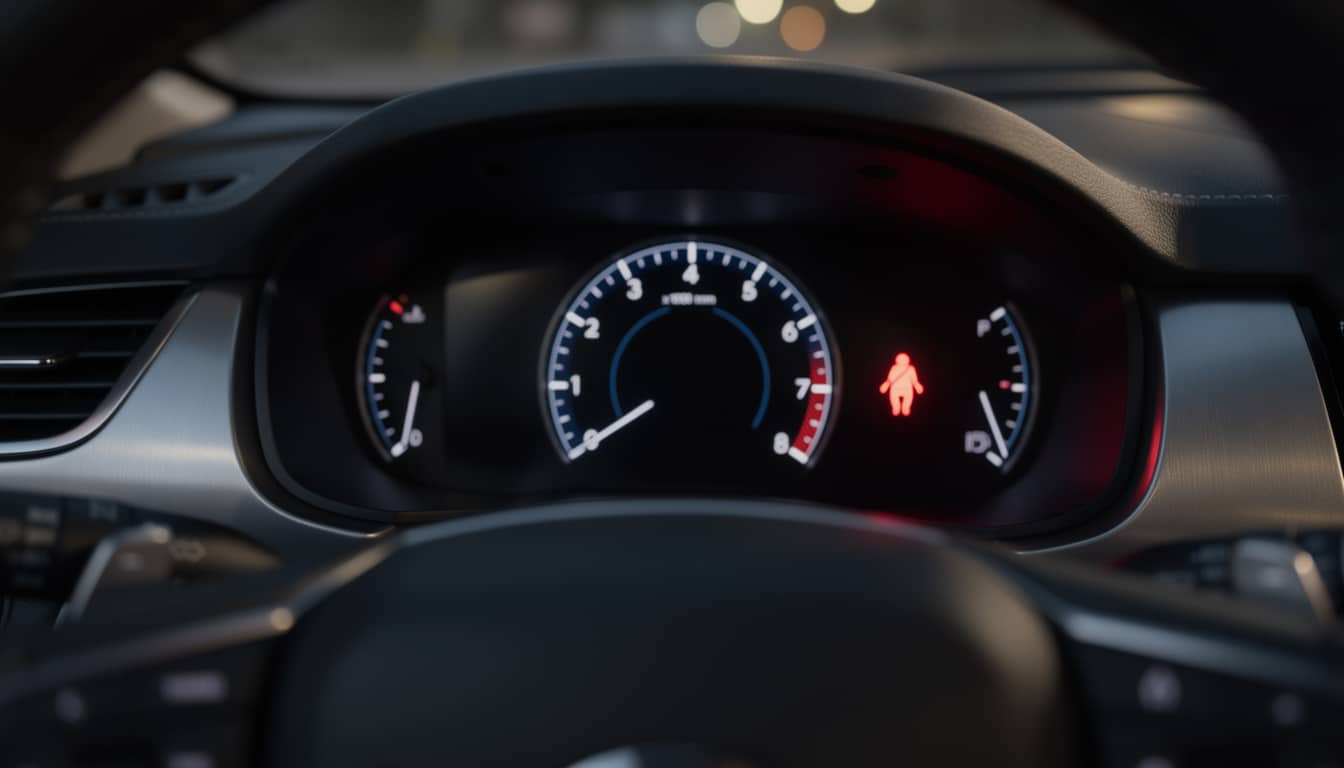
The airbag warning light blinking or staying illuminated is more than just a dashboard annoyance—it signals a potential fault in your vehicle’s Supplemental Restraint System (SRS). This light alerts you that your airbags or related sensors may not function properly, putting your safety at risk. Understanding the seven key reasons why this light might come on allows you to act quickly and ensure your vehicle’s safety systems are fully operational.
Key Takeaways :
- The airbag warning light indicates possible malfunctions in the supplemental restraint system crucial for safety.
- Common causes include faulty airbag sensors, electrical connection problems, and damaged clock spring components.
- Ignoring the warning can lead to airbags failing to deploy during a crash, greatly increasing injury risk.
- Professional diagnostics using diagnostic trouble codes are essential before attempting repairs.
- Repair costs vary widely, from simple sensor replacements around £50 to full airbag module replacements costing over £700.
Why Your Airbag Warning Light Activates: Understanding Key Airbag Sensor Failures
When the airbag warning light suddenly illuminates, one of the most frequent culprits is a faulty airbag sensor. These sensors—part of the broader Supplemental Restraint System (SRS)—play a crucial role by detecting sudden deceleration or collisions and instructing airbags to deploy accordingly. A single malfunctioning sensor can signal the system that something is wrong, causing the warning light to appear even if the airbags themselves remain intact.
Each sensor continuously sends data to the airbag control module, and if it fails or transmits incorrect info, the system triggers a fault code. A mechanic with an OBD-II scanner can extract these diagnostic trouble codes to identify which sensor needs attention. For example, a bad ABS sensor, frequently essential to airbag system performance, can cause the warning light to switch on suddenly. Repair often involves cleaning, recalibrating, or replacing the faulty sensor.
Beyond the sensor’s physical failure, environmental factors like corrosion or accidental damage during routine vehicle maintenance often contribute to sensor problems. This is why a proper diagnosis must include a thorough inspection of sensor wiring and mounts. Leaving such faults unattended risks the complete disablement of your vehicle’s airbag deployment capabilities.
For additional reference on common automotive issues related to sensor faults and warranties, consider inspecting cases like Audi Q7 reliability problems, which often mention complex sensor integrations and their impact on safety systems.
💡 Expert Tip: If the airbag warning light comes on repeatedly after sensor replacement, have the control module's software updated; outdated firmware can misinterpret sensor data, causing false alarms.
Electrical Connection Troubles: Wiring and Clock Spring Issues
The airbag system is a web of intricate electrical connections. A slight malfunction anywhere along this network can trip the airbag warning light. Among the critical points prone to failure is the clock spring, an essential wiring coil located inside the steering column that ensures electrical continuity between the airbag unit in the steering wheel and the rest of the vehicle’s systems.
The clock spring allows your steering wheel to turn while maintaining a constant electrical connection to the airbag and horn. If this component suffers from wire fraying, breakage, or corrosion, the disrupted circuit sends an erroneous signal to the vehicle’s computer, which instantly triggers the airbag warning light. Since the clock spring is central to airbag deployment, its failure creates a high-severity fault that demands immediate repair.
Additionally, general wiring faults such as loose connectors or corroded electrical terminals influence the system’s reliability. These electrical issues can be elusive, causing intermittent illumination of the airbag warning light that sometimes goes away temporarily and then returns without a clear pattern.
Repairing wiring faults involves detailed inspection and often requires accessing hard-to-reach areas behind panels or within the dashboard. Hiring a technician skilled in handling electrical systems is crucial since incorrect repairs can trigger new faults or safety hazards.
Maintaining clean, corrosion-free connections is a simple but effective preventative measure. Regular checks during routine maintenance can identify potential electrical faults before they ignite the warning light.

Airbag Module and Seatbelt Sensor Malfunctions: Safety System Synergy Explained
The airbag module acts as the brain of your Supplemental Restraint System, processing inputs from sensors and controlling airbag deployment commands. This vital component is sensitive to environmental factors, particularly moisture intrusion and corrosion, which can severely impair its functionality.
Water ingress, often due to leaks or compromised seals behind the dashboard or steering column, leads to internal damage to the module’s circuitry or connectors. When this happens, the system detects faults immediately, causing the airbag warning light to glow. Repair may require module refurbishment or complete replacement, both relatively costly endeavors.
Importantly, the airbag system does not operate in isolation. It works closely with the seatbelt sensor, which detects if seatbelts are engaged correctly. Problems like torn seatbelts, malfunctioning retractors, or broken sensors can also trigger the airbag warning light, reflecting the system’s dependence on properly functioning safety restraints.
Fixing seatbelt sensor issues is essential not only for airbag system reliability but also for legal roadworthiness. Some vehicles display a combined warning light or separate seatbelt alerts, but any indication of malfunction requires prompt attention.
Such interactions are especially noted in luxury models with advanced safety systems. For instance, seeing reports on Mercedes-Benz S-Class reliability illustrates how these complex safety systems interact and the potential consequences of a minor sensor failure.
Resetting the Airbag Warning Light: What You Should Know
Many drivers wonder: can I reset the airbag warning light by myself? My professional advice is clear—do not attempt any resets without a thorough diagnosis. The airbag system is complex and sensitive, and attempting manual resets without understanding the underlying issue risks masking a potentially dangerous problem.
A savvy mechanic uses a diagnostic scanner to retrieve the diagnostic trouble code, pinpointing the fault before performing a reset. This ensures that the root cause is addressed rather than leaving a hidden safety hazard unresolved. Resetting the light prematurely may also cause the system to fail the next MOT test, and in extreme cases, increase your risk during a collision by disabling airbag deployment.
To demonstrate this procedure and its importance, I recommend viewing tutorials and diagnostic walkthroughs that provide a clear understanding of the technical steps involved in airbag system servicing and resetting.

Driving with the Airbag Light On and Repair Costs Explained
Technically, driving with the airbag warning light activated is possible, but it’s strongly discouraged. The illuminated light signals your vehicle safety system is compromised, meaning airbags might fail during an accident. Such negligence not only increases injury risk but might contravene local laws regarding vehicle safety standards.
Furthermore, an illuminated airbag warning light causes your car to fail the UK’s mandatory MOT inspection. Driving without a valid MOT can lead to fines, penalty points, or driving bans. This legal risk compounds the safety concern, underscoring why prompt repair matters.
Repair costs vary widely depending on the fault:
| Repair Type | Estimated Cost Range (GBP) | Description |
|---|---|---|
| Diagnostic scan | £20 – £50 | Reading diagnostic trouble codes to identify system faults. |
| Sensor or wiring repairs | £50 – £250 | Replacement of faulty sensors, clock springs, or wiring repairs. |
| Airbag module replacement | £700 – £1,000+ | Replacing entire airbag control module due to severe faults or corrosion. |
Knowing this cost breakdown helps manage expectations and plan repairs efficiently. Accurate diagnosis prevents unnecessary expenses and ensures your airbag system functions optimally.
What does the airbag warning light indicate on my dashboard?
The light signals a detected fault within the Supplemental Restraint System, including issues with sensors, electrical connections, or the airbag module, requiring prompt professional attention.
Can I drive safely if the airbag warning light is on?
Driving with the light on is risky because airbags might not deploy in an accident and your vehicle can fail mandatory safety inspections.
Is it possible to reset the airbag light myself?
Resetting without diagnosing the root cause is unsafe and risks masking serious faults. Always get a professional diagnostic and reset service.
What are common reasons the airbag light turns on unexpectedly?
Faulty airbag sensors, damaged clock spring, wiring issues, corroded airbag modules, seatbelt sensor malfunctions, and unreset post-collision systems are typical causes.
How much can repairing an airbag system fault cost?
Costs vary from around £50 for minor repairs like sensor replacements to upwards of £1,000 for comprehensive airbag module replacements.