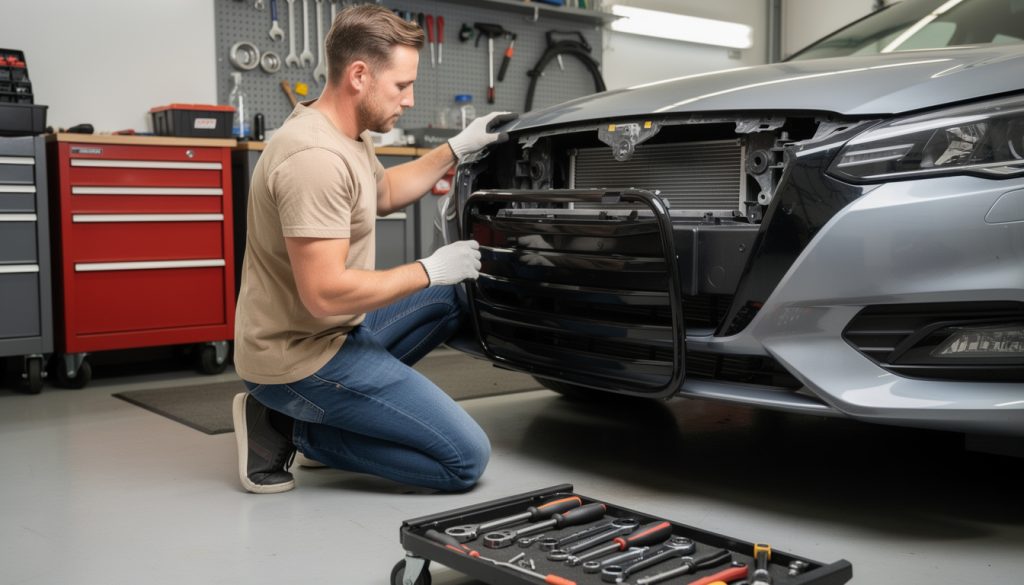
The grille is a critical component located at the front of your vehicle, shielding the radiator and air intake from debris while ensuring optimal airflow to keep your engine cool. Over time or after impacts, grilles can sustain damage that not only diminishes your car’s appearance but also risks harm to vital engine parts. Whether you encountered road debris on country roads or noticed cracks and breaks during routine inspections, knowing how to replace your car grille yourself is an invaluable skill to save time and money.
Key Takeaways :
- The grille protects your radiator and engine by preventing debris entry.
- Damage like cracks or holes can lead to costly damage beyond the grille.
- Replacing a grille is a straightforward DIY task with basic tools like socket sets.
- Proper removal and installation ensure the grille fits securely without rattling.
- Following a detailed step-by-step guide minimizes risks and optimizes results.
Understanding the Importance of Your Vehicle’s Grille in Car Maintenance
The grille is often overlooked in regular car maintenance, yet its role in protecting critical engine components and facilitating airflow is essential. Positioned at the front, it acts as a guard for your radiator, the heat exchanger that cools engine coolant. Without a functioning grille, foreign bodies such as stones, insects, or road debris can penetrate the radiator area, causing dents, punctures, or blockages that reduce cooling efficiency. This exposure often leads to overheating and, in severe cases, engine damage.
Besides protection, the grille directly affects the aerodynamic profile and cooling system of your vehicle. Many manufacturers design grilles with precise airflow parameters to optimize engine temperature management. A damaged or poorly installed grille disrupts this airflow, causing the cooling system to work harder, increasing fuel consumption, and potentially shortening engine lifespan.
For instance, a cracked grille on a 2024 midsize SUV driven daily on rural roads could allow dirt and small rocks into the engine bay. Left unchecked, this damage can evolve quickly. A seemingly minor hole can result in a radiator puncture, costing anywhere from $300 to $800 for replacement or repair. Hence, proactive grille replacement not only maintains vehicle aesthetics but also prevents costly repairs.
💡 Expert Tip: Regularly inspect your grille during car washes or oil changes. Early signs of damage can be subtle; catching these quickly saves you from more expensive engine repairs later.
Assessing Damage and Preparing for Grille Replacement: A Vehicle Grille Tutorial
Before diving into grille installation, it’s crucial to accurately diagnose the grille’s condition. Visual inspection is the most straightforward method—look for cracks, holes, misaligned sections, or broken tabs holding the grille securely. Pay extra attention after minor collisions or driving on rough, unpaved roads.
Often, people mistake the grille for the radiator itself. Remember, the grille is an external screen, while the radiator is seated behind it. Damage to the grille does not always mean radiator problems, but neglecting the grille can expose the radiator to hazards.
Here’s a checklist for an effective initial assessment:
- Visualize grille edges for fractures or looseness.
- Check the grille’s attachment points for broken clips or bolts.
- Look behind the grille to confirm no debris reached the radiator.
- Listen for unusual vibrations or rattling sounds when driving, indicating an improperly seated grille.
Understanding which tools are essential for this DIY car repair is vital. Typically, you’ll need a socket set or spanners to unfasten bolts, and penetrating oil like WD40 to loosen corroded nuts. Having a clean, well-lit workspace helps avoid losing small screws or clips—critical to ensuring a smooth installation process.
💡 Expert Tip: Store removed bolts in a magnetic tray or labelled container during disassembly to avoid losing them and to streamline reassembly.
Step-by-Step Guide for Removing Your Car Grille Safely and Efficiently
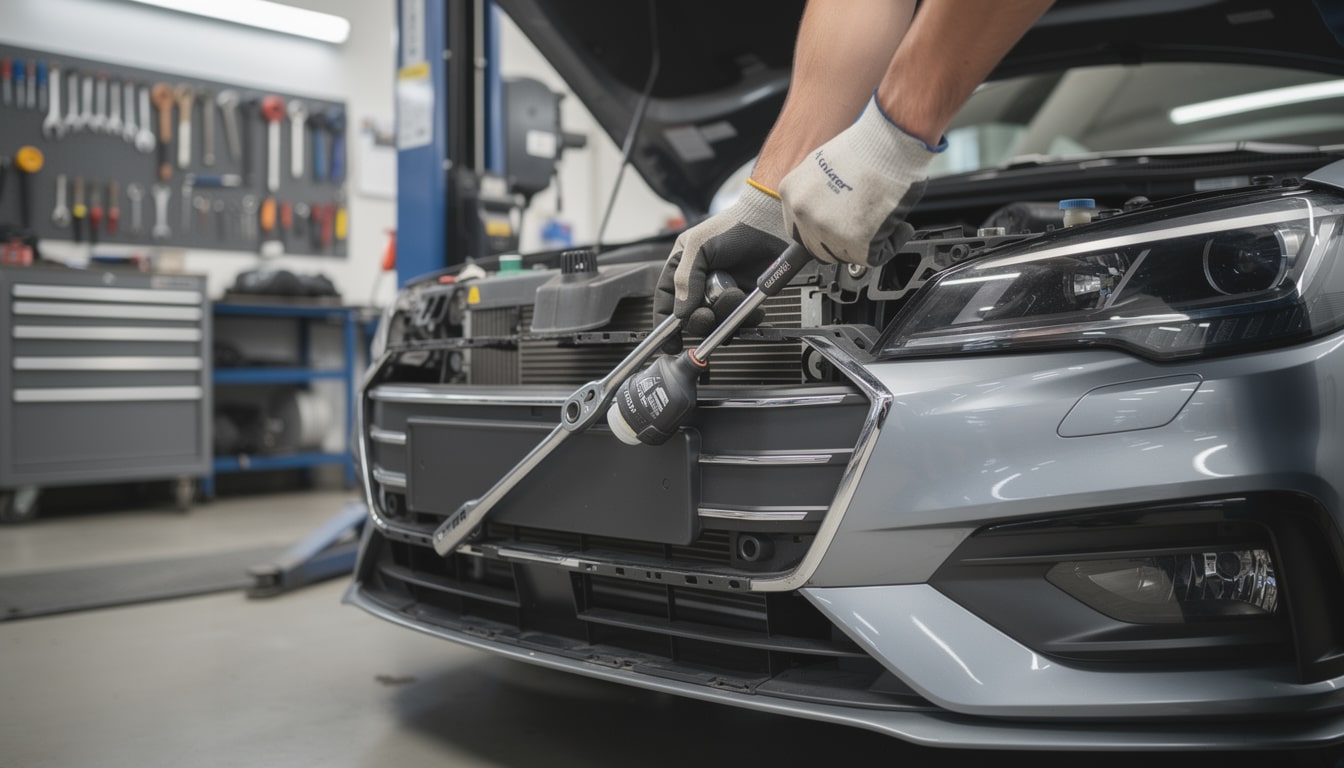
Replacing your car grille involves systematic steps, focusing on safety and detail to avoid damaging nearby components. Begin by opening the bonnet to gain full access to the grille and its fixing points. Many vehicles have a protective strip or cover over the top of the grille, which you’ll need to remove first. This cover safeguards the grille bolts and can be clipped or screwed in place.
Once exposed, locate all the bolts or screws fastening the grille. Often these can be tight or rusted, so applying a lubricant spray will speed removal. Using the appropriate size socket or wrench, carefully remove each bolt, keeping track of them for later reuse.
After loosening all fasteners, the grille should gently come free from its mounting. It may require slight maneuvering to release tabs or clips. Be cautious not to force it, which can damage the grille frame or surrounding panels.
After removal, place the old grille next to the new replacement to verify size and mounting points match precisely. This comparison prevents the common mistake of buying an incorrect grille that doesn’t fit or align properly.
| Step | Action | Tools Needed | Estimated Time |
|---|---|---|---|
| 1 | Remove bonnet cover or strip | Flathead screwdriver | 5 minutes |
| 2 | Locate and spray bolts with lubricant | WD40 spray | 5 minutes |
| 3 | Unbolt grille fasteners | Socket set or spanners | 15-20 minutes |
| 4 | Carefully detach grille from clips | Hands with gloves | 10 minutes |
| 5 | Compare old and new grille | None | 5 minutes |
Following this methodical process will leave you prepared to install your new grille with confidence and avoid common pitfalls during a grille installation.

How to Install Your New Car Grille: Practical Tips and Car Customization Insights
Inserting the new grille reverses the removal procedure but calls for precision to ensure everything locks firmly in its place. Start by aligning the new grille’s mounting tabs with the framework on the car body. Many modern grilles snap into position, requiring a gentle push or slide to seat properly. Avoid excessive force, which can crack plastic mounting points.
Once aligned, secure the grille with the original bolts. Tighten fasteners gradually and evenly. If mounting holes are made of aluminum or plastic, be mindful of overtightening, which could strip threads or crack parts.
After installation, test the fit by gently shaking the grille to confirm it does not rattle. Close the bonnet and take the car for a brief drive to listen for any unusual sounds indicating loose fittings. If rattling exists, stop and re-check bolt tightness and clip engagement. A well-installed grille supports both vehicle aesthetics and optimal cooling system function.
Upgrading your grille can also serve as an aesthetic car customization. Many enthusiasts replace factory grilles with mesh or painted options to give their vehicle a distinctive look and enhanced airflow. Be sure any aftermarket grille fits your vehicle model precisely to avoid compromising protection or warranty.
- Ensure compatibility of the new grille with your car model.
- Lubricate mounting clips for easier installation.
- Check the grille edges align flush with body panels for a seamless look.
- Test driving highlights potential vibration or noise issues early.

Common Issues, Risks, and Costs Associated with Car Grille Replacement
While grille replacement is generally straightforward, some common issues may complicate the process or add hidden costs. Damaged mounting points can require plastic welding or replacement clips, increasing labor and parts expenses. Some vehicles feature active grille shutters with sensors and motors complicating replacement and potentially requiring recalibration.
Risks of neglecting grille damage include overheating due to compromised radiator protection, which can lead to severe engine failure if unnoticed. Prices for grille replacements vary between $50 for basic aftermarket parts to over $500 for genuine OEM grilles on premium models. Labor costs, if outsourced, typically range from $75 to $150 depending on complexity and workshop rates.
In some cases, aftermarket grilles may be less expensive but risk fitment issues or durability problems. Investing in quality replacement parts, ideally verified by reviews or professional advice, ensures long-term satisfaction and vehicle safety.
Checklist of common grille-related problems and solutions:
- Loose clips: Re-secure or replace clips
- Rusted bolts: Use penetrating oil or replace hardware
- Broken mounting tabs: Plastic welding or replacement parts
- Misaligned grille: Adjust fit or verify model compatibility
- Active grille shutter issues: Professional recalibration required
| Problem | Potential Cause | Typical Repair Cost (USD) | Severity |
|---|---|---|---|
| Cracked grille | Impact with debris or minor collisions | 50-200 | Medium |
| Broken mounting clips | Wear & tear or improper removal | 20-50 | Low |
| Active grille shutter failure | Electrical or mechanical malfunction | 300-800 | High |
| Radiator damage from missing grille | Debris intrusion | 300-1000 | High |
Being proactive and well-prepared minimizes downtime and costs associated with grille replacement, making this accessible DIY task a smart investment in your vehicle’s longevity.
Can I replace my car grille without professional help?
Yes, car grille replacement is a straightforward task for most drivers equipped with basic tools and a detailed step-by-step guide. Careful handling ensures no damage to body panels or engine components.
How do I know if my vehicle grille needs replacing?
Look for visible cracks, holes, loose attachments, or rattling noises while driving. Any damage exposing internal components like the radiator warrants prompt replacement.
What tools do I need for grille replacement?
A socket set or spanners sized to your vehicle’s bolts, lubricant like WD40 to loosen stubborn nuts, and optionally screwdrivers to remove covers or strips.
Will replacing the grille affect my car’s warranty?
Using OEM parts and following proper installation procedures usually maintains warranty coverage. Check your manufacturer’s policy for aftermarket parts.
Are aftermarket grilles a good option?
Aftermarket grilles can enhance customization and reduce costs but require careful selection to ensure proper fit and durability comparable to OEM parts.