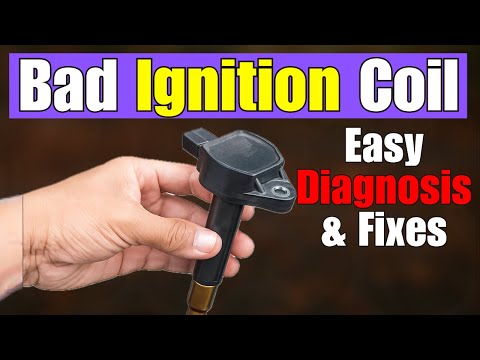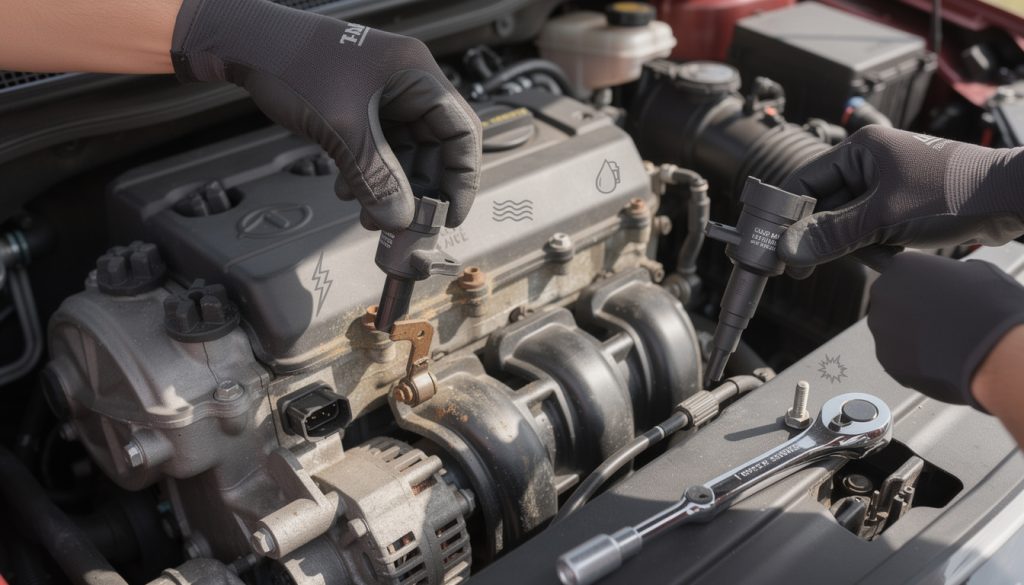
Experiencing trouble starting your car or noticing that it’s suddenly less powerful during a drive could be signs pointing toward a failing ignition coil. This crucial component transforms the battery’s low voltage into the high voltage necessary to ignite the fuel-air mixture, fueling your engine. Being able to recognize warning signs early on can save you from inconvenient breakdowns and costly repairs by guiding timely action and professional intervention.
Key Takeaways :
- Engine misfires, stalling, and poor acceleration are common symptoms of ignition coil problems.
- The ignition coil boosts your car’s battery voltage to ignite the fuel, making it essential for proper engine function.
- Individual ignition coils can be replaced without swapping the entire pack, depending on the system.
- Basic tools and around 60–90 minutes are enough for an experienced DIYer to replace a coil safely.
- Ignoring ignition coil failure can lead to reduced fuel economy and expensive catalytic converter damage.
How the Ignition Coil Functions Within the Ignition System
The ignition coil plays a pivotal role in your vehicle’s ignition system, working alongside components such as the spark plugs, battery, alternator, and ignition switch. Its primary job is to convert the 12-volt power from your car battery into a high-voltage electric spark, typically between 20,000 to 40,000 volts. This spark is what ignites the fuel-air mixture inside the engine cylinders, enabling combustion.
The coil is built around an iron core wrapped with two sets of tightly wound copper wire coils. The primary coil receives low voltage current, creating a magnetic field. When this flow is interrupted, the magnetic field collapses rapidly, inducing a high voltage in the secondary coil. This voltage then travels to the spark plugs, producing the spark necessary to ignite the fuel.
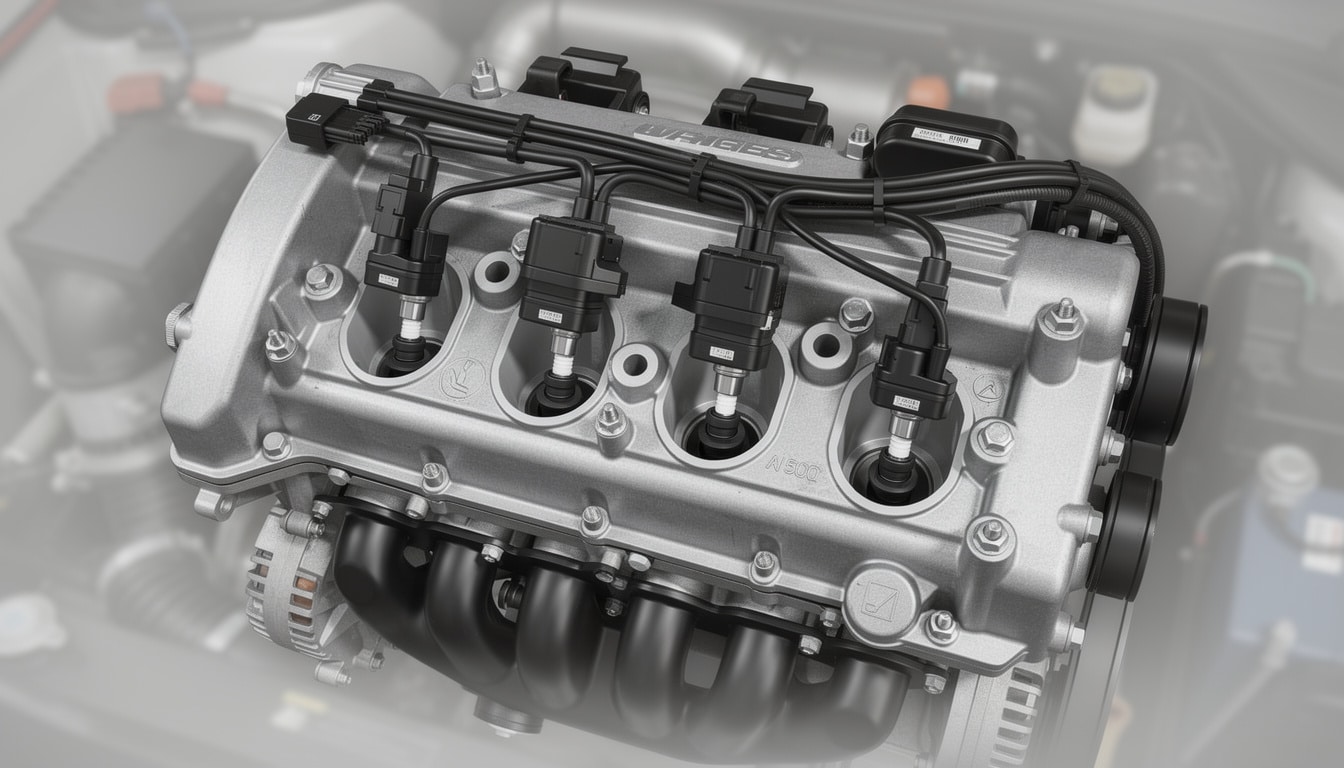
Failing ignition coils can severely disrupt this voltage transformation. Heat buildup and internal wear due to constant electrical activity can eventually cause the coil’s insulation to fail, resulting in weak or no sparks. Modern vehicles often use individual coil-on-plug systems, where each spark plug has its own coil, improving reliability but increasing the replacement scope.
Understanding this process helps make sense of the warning signs that faulty ignition coils generate. It also reveals why proper maintenance and timely replacement are essential to prevent damage to other parts of your engine, making the coil’s condition a key factor in vehicle troubleshooting and automotive repair.
7 Warning Signs That Indicate Ignition Coil Failure
Recognizing early symptoms of coil failure is crucial to avoid significant engine damage. Here are seven unmistakable signs that your ignition coil may be compromised and in need of attention:
1. Engine Misfire and Stalling
When the ignition coil stops effectively delivering voltage, one or more cylinders fail to ignite fuel correctly. This results in an engine misfire, which you might notice as jerking, rough idling, or hesitation during acceleration. The misfire often causes the car to stall unexpectedly, sometimes while idling or trying to accelerate, indicating serious ignition coil distress.
2. Difficulty Starting the Engine
If your vehicle struggles to start, producing just a clicking sound with the engine refusing to turn over, the ignition coil might be the culprit. A single failing coil in a car with only one ignition coil can completely prevent the engine from firing. For a detailed look at starting issues and their common causes, visit car not starting tips.
3. Decline in Fuel Efficiency
A malfunctioning ignition coil leads to incomplete combustion, forcing the engine to consume more fuel for the same power output. You may notice you’re filling up more often. This inefficiency might also trigger oxygen sensor irregularities that further worsen fuel economy and accelerate wear on expensive components like the catalytic converter.
4. Illumination of the Check Engine Light
The check engine light’s illumination can signal various problems, including coil failure. Diagnostic trouble codes (DTCs) such as P0300 to P0312 often indicate misfires, while codes between P0350 and P0362 point directly to ignition coil issues. Investing in an OBD-II scanner or consulting your mechanic promptly can help pinpoint the root cause. For more information on related dashboard alerts, see car check engine causes.
5. Engine Backfiring
Unburnt fuel escaping into the exhaust can ignite, producing a loud popping or backfiring sound. This typically happens when the ignition coil fails to provide the necessary spark timing, leaving fuel unburned in the combustion chamber. Backfiring not only indicates ignition problems but can also damage the exhaust system if left unattended.
6. Oil Leaks Around the Coil
Ignition coils contain an insulating oil to prevent overheating. Over time, cracks in the coil housing due to overheating may cause this oil to leak. Spotting oil around the coil should prompt immediate inspection to avoid electrical shorts and further coil failure.
7. Rapid Spark Plug Wear
Faulty spark plugs can place additional strain on the ignition coil, sometimes causing premature coil failure. If you notice frequent spark plug issues, such as fouling or degradation, it’s essential to inspect both the plugs and the coil in tandem for a reliable fix.
Simple Checks and Preventative Measures to Avoid Ignition Coil Problems
Prevention is always better—and cheaper—than repair. Here’s how to protect your ignition coil and extend its lifespan:
- Regular Spark Plug Inspections: Faulty plugs can overload the coil; replacing them timely reduces coil stress.
- Visual Inspections of Coil Housing: Check for oil leaks, cracks, or burnt wires to catch early warnings.
- Scheduled Car Maintenance: Follow manufacturer service intervals and address engine concerns promptly.
- Avoid Excessive Heat Exposure: Engine overheating damages coils; ensure your cooling system is in good shape.
- Use Quality Replacement Parts: OEM coils or trusted aftermarket brands reduce risk of failure.
By adopting these measures, you not only preserve the coil but also prevent secondary issues like decreased fuel economy or exhaust damage, integral to an effective vehicle troubleshooting routine.
Step-by-Step Guide to Replacing an Ignition Coil
With some mechanical knowledge, replacing a faulty ignition coil is within reach for many car owners. Let me walk you through the essentials:
- Preparation: Park on level ground, switch off the ignition, and disconnect the battery to prevent electrical shocks during replacement.
- Locate the Ignition Coil: Usually atop the engine, near the spark plugs. Use a spark tester to confirm coil failure.
- Disconnect and Unbolt: Remove electrical connectors carefully, then unbolt the coil from its mount with appropriate tools.
- Install New Coil: Compare the new coil with the old to ensure compatibility, then bolt it in place and reconnect wiring.
- Test Drive: Start the engine and take a short drive. Improvement in engine responsiveness and fuel efficiency should be noticeable.
💡 Expert Tip: Always disconnect the battery first to avoid accidental short circuits. Using a diagnostic scanner before replacement ensures correct identification of the faulty coil.
Costs and Parts Information
Prices for ignition coils generally lie between £30 and £70 depending on your vehicle. Labor, if handled by a pro, can bring total replacement costs to around £100 to £200. For vehicles with coil-on-plug systems, replacing individual coils is standard, but for coil pack systems, multiple coils may require simultaneous replacement.
Risks of Driving With a Faulty Ignition Coil and When to Seek Professional Help
Driving with a malfunctioning coil is risky. You may experience rough idling, engine misfires, and reduced power that compromise safety. Prolonged driving under these conditions can lead to catalytic converter damage—a repair costing several hundred pounds. If symptoms persist after replacement, professional diagnostics will uncover deeper engine issues, potentially linked to intake manifold or related system problems.

Replacing the ignition coil can be straightforward with the right tools and procedure. Yet, complex issues are best handled by professionals to ensure lasting automotive repair results.
Frequently Asked Questions About Ignition Coil Issues
Can I replace just one ignition coil instead of all?
Yes, it’s often possible to replace only the faulty coil. However, if your vehicle uses a coil pack, multiple coils might need replacement simultaneously.
How long does an ignition coil usually last?
Typically, ignition coils last between 100,000 and 150,000 miles, depending on driving habits and maintenance.
Is it dangerous to drive with a bad ignition coil?
Driving with a failing coil can cause engine misfires, reduced power, and damage to other components. It’s advisable to repair promptly to avoid costly issues.
Do I need to disconnect the battery before replacing the ignition coil?
Yes. Disconnecting the battery prevents electric shocks and short circuits while working on ignition system components.
Can I tell if an ignition coil is bad just by looking at it?
Sometimes visible signs like cracks, oil leaks, or burn marks suggest coil failure, but many problems are internal and require diagnostic testing.