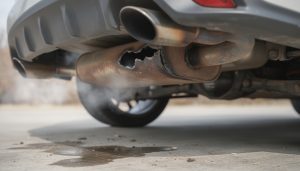
In modern vehicles, the exhaust heat shield is an unsung hero, quietly performing the critical task of protecting your car from the intense heat generated by the exhaust system. Positioned strategically around vital components like the exhaust manifold, catalytic converter, and muffler, the heat shield acts as a guardian, preventing potential damage that could lead to costly repairs or, in some cases, safety hazards. However, when this protective barrier starts to fail, it often sends out warning signals that drivers should not ignore. Understanding these signs can save you from mechanical headaches, unexpected breakdowns, and potential dangers on the road.
Heat shield problems can manifest as persistent car noise or unusual smells, but their implications extend much further. A neglected failing heat shield can cause overheating issues, accelerate wear on exhaust system components, and even increase fire risks. Therefore, timely attention and repair are key to maintaining safe and efficient vehicle operation in 2026, particularly as modern cars continue to rely on precise thermal management for optimal performance.
Key Takeaways:
- Exhaust heat shield failure often produces a loud rattling sound, resulting from loose bolts or corrosion.
- This component protects crucial parts such as fuel lines and wiring from excessive heat damage.
- Overheating caused by a damaged heat shield can reduce engine performance and increase fire risk.
- DIY fixes like tightening bolts or using heat-resistant clamps offer temporary relief; professional heat shield replacement is sometimes necessary.
- A faulty heat shield may lead to an MOT failure if it compromises safety-critical parts, highlighting the importance of regular vehicle maintenance.
Recognizing the Warning Signs of a Failing Exhaust Heat Shield
The first hint of trouble with your exhaust heat shield usually comes as an irritating, persistent rattling sound during driving. This sound is often mistaken for general car noise, but it has a very specific origin: the heat shield has become loose and is vibrating against the vehicle’s undercarriage. As the metal component loosens—typically because of rusted or failing bolts—it moves excessively, creating that distinctive tin-cans-like noise beneath your vehicle.
Another common sign is the presence of a burning smell, particularly reminiscent of plastic or rubber. This odor is an alarming indication that the heat shield is failing to divert extreme exhaust temperatures away from heat-sensitive components such as wiring insulation, fuel lines, or plastic parts under the vehicle’s floor. In prolonged cases, this excess heat can cause components to melt or degrade prematurely.
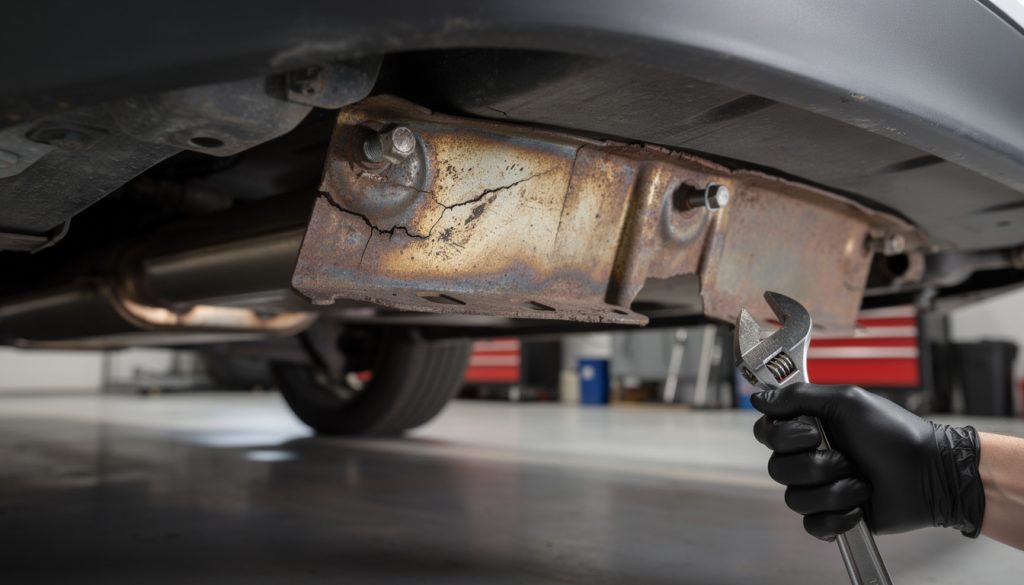
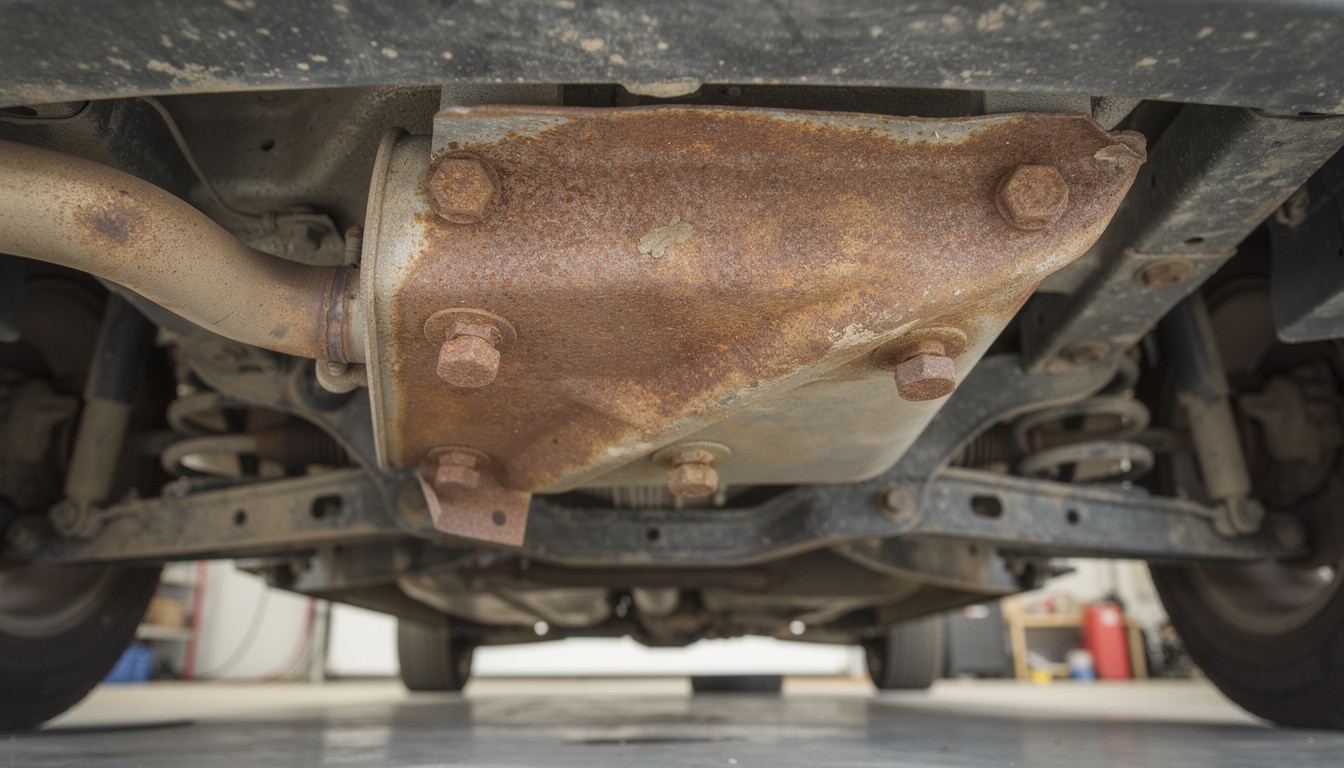
Sometimes, the issue is even visible to the naked eye. Careful inspection under the vehicle can reveal rust holes, cracks, or dents in the heat shield. The presence of corrosion is particularly common in regions where road salt is used during winter months, a factor that accelerates the breakdown of metal fasteners and the shield’s structure.
Beyond noises and smells, a failing heat shield can also amplify heat inside the cabin, notably around the pedals and floorboards. This excess heat transfer is uncomfortable and could eventually damage the vehicle’s interior components. More technically, overheating caused by a compromised heat shield may lead to reduced engine performance characterized by rough idling, power loss, or even engine misfires due to thermal stress on surrounding exhaust parts.
💡 Expert Tip: If you hear a consistent rattling sound when your car is idling or accelerating, safely check underneath your vehicle after it has cooled down. Look for loose or dangling parts of the heat shield and address them immediately to avoid worsening damage.
Common Causes Behind Exhaust Heat Shield Failure and Their Impact on Vehicle Safety
Understanding what leads to the failing heat shield phenomenon is essential for diagnosing the problem and preventing recurrence. The most frequent culprit is loose bolts or fasteners. The continual vibration of your vehicle, combined with temperature-induced metal expansion and contraction, gradually weakens these attachments. Over time, this looseness causes the shield to vibrate freely, resulting in that notorious rattling noise.
Another leading cause is physical damage from road debris and impacts. As the heat shield is mounted underneath the car, it is vulnerable to strikes from stones, speed bumps, or incorrectly placed jacks during maintenance. Even minor dents can deform the shield enough to reduce its ability to properly disperse heat or stay securely fastened.
Rust and corrosion represent the stealthier adversaries. When exposed to water, salt, and dirt, especially during wet seasons, the metal of the heat shield and its mounts degrade. Rust erodes the integrity of the shielding material and its connections, causing sections to break away or twist, leading to early failure.
Lastly, poor installation during previous repairs or replacements can contribute to premature heat shield issues. If replaced components are not correctly mounted, with the appropriate fasteners or torque settings, the shield may come loose faster than anticipated and cause intermittent rattling.
Driving with a compromised heat shield affects not just comfort but safety. Overheated fuel lines or wiring harnesses risk melting or causing electrical faults. A damaged shield raises fire hazards that jeopardize both the vehicle and its occupants. According to automotive safety reports in recent years, incidences of fire linked to exhaust system failures underline the necessity of prompt repairs and regular inspections.
DIY and Professional Methods to Stop Your Exhaust Heat Shield from Rattling
Addressing a rattling exhaust heat shield starts with diagnosing the root cause. The simplest fix for many drivers is to tighten or replace loose bolts and fasteners. After your vehicle’s exhaust has cooled completely, locate the rattling shield and use a wrench to retighten any loose connections. This quick solution often restores stability and eliminates noise for some time.
If bolts or mounts are missing or heavily corroded, temporary measures can be applied. Using heat-resistant hose clamps or specialized high-temperature zip ties can secure parts that otherwise would rattle freely. However, these are stop-gap solutions. The best approach, especially for severely degraded or damaged heat shields, involves fully replacing the component to restore its full protective function.
For long-term repair, ensuring that mounting points are intact is crucial. Sometimes, these points need professional welding or reinforcement. While this step requires specialized tools and knowledge, it significantly reduces the risk of recurrence. It is also important to avoid removing the heat shield entirely without replacement—even if the noise is bothersome—since the shield plays a vital protective role.
Regular inspection and maintenance are key components of vehicle maintenance routines that prevent heat shield failures. Make it a habit to check under your car at least once a year or during oil changes to spot early signs of damage.
💡 Expert Tip: If you notice persistent car noise suspected to originate from the exhaust system, don’t wait for parts to fall off. Repairs like heat shield replacement are cost-effective and prevent further damage.
Estimated Costs and Considerations for Exhaust Heat Shield Repair and Replacement
When confronting the need for heat shield repair, budget is a paramount consideration. In many cases, minor fixes such as tightening bolts or fitting clamps may cost under £30 if done by a professional or even less with a DIY approach. Materials like hose clamps or heat-resistant zip ties typically fall well below £20.
For more extensive damage requiring heat shield replacement, the costs increase. A replacement shield costs between £40 and £120 for mid-range cars, while luxury or performance vehicles, such as BMW or Mercedes models, may demand higher expenses for parts. Labour fees in garages range between £50 and £150 depending on the complexity and the region.
Here is a quick comparison of estimated repair costs:
| Repair Type | Estimated Parts Cost | Labour Cost | Total Estimated Cost |
|---|---|---|---|
| Tightening Bolts/Minor Fixes | £0 – £20 (DIY) | £10 – £30 | £10 – £50 |
| Heat Shield Replacement (Standard Vehicles) | £40 – £120 | £50 – £150 | £90 – £270 |
| Heat Shield Replacement (Luxury Vehicles) | £100 – £200+ | £70 – £200+ | £170 – £400+ |
It is advisable to request quotes from multiple garages and sources for parts. Some owners also find aftermarket components viable, offering savings without compromising durability. Checking for signs of impact damage or issues that could harm other exhaust components can also save you money in the long run.
Implications of a Faulty Exhaust Heat Shield on Vehicle Inspections and Safety Compliance
Regarding legal vehicle inspections such as the MOT in the UK, a faulty heat shield may or may not result in test failure. The deciding factor is whether the damage presents a safety risk. For example, if the shield’s failure exposes fuel lines or wiring to excessive heat, inspectors will deem this a serious hazard, resulting in a failed test. Conversely, minor rust or non-critical rattling often passes if the shield is still securely attached and does not endanger the vehicle’s operation.
In practice, vehicle owners should take no chances by attempting to preemptively address issues with heat shields prior to inspection. Simple maintenance, including tightening or replacing suspected faulty shields, substantially reduces the chance of failure. In case of recurring or suspicious symptoms, a professional diagnostic check is recommended.
This approach ensures safety and compliance while sparing drivers from last-minute repairs.


For more technical information related to exhaust components and failures such as turbo actuators, readers can explore reliable resources like this detailed automotive report, which broadens the understanding of related repair topics.
Can I drive my car with a failing exhaust heat shield?
While you might be able to drive a short distance, it is not advisable. A failing heat shield can cause overheating and damage sensitive components, and in some cases, it creates a fire hazard. Immediate inspection and repair are recommended.
How often should I check my exhaust heat shield?
It is good practice to visually inspect your heat shield at least once a year or every time the vehicle is lifted for maintenance. Paying attention to rattling noises can also be an early warning indicator.
Is a rattling heat shield dangerous?
Yes, a rattling heat shield suggests it is loose and might fall off, potentially causing damage to the vehicle or posing a risk to other road users. It also may fail to protect the vehicle from heat damage, making it a safety concern.
Can I fix heat shield problems myself?
Minor issues, such as loose bolts or small rattles, can often be fixed with basic tools and materials like hose clamps. However, extensive damage requires professional replacement to ensure proper protection and safety.
Does a faulty heat shield affect engine performance?
Yes, if the heat shield traps excessive heat near engine components, it can contribute to overheating and engine misfires, thereby reducing overall performance.