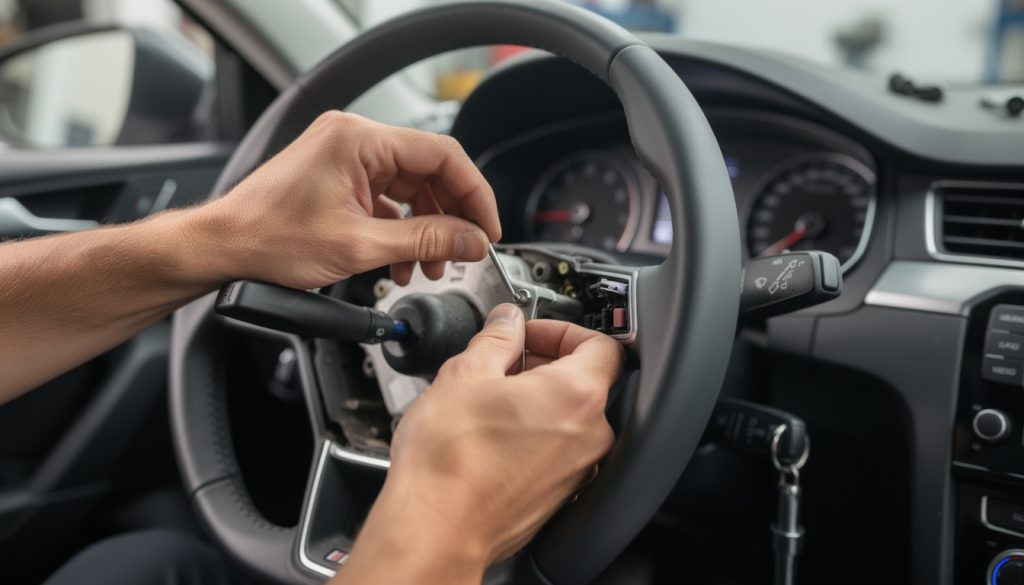
The indicator stalk is a fundamental part of your car’s turn signal system, allowing you to communicate your intentions clearly to other drivers without taking your hands off the steering wheel. Over time, these stalks can wear out, become loose, or fail to return to their neutral position after a turn. Knowing how to replace an indicator stalk yourself can save you time and money. This step-by-step guide from the breakerlink blog walks you through the entire process, ensuring you can carry out this common but essential repair confidently and safely.
Key Takeaways :
- The indicator stalk controls your car’s turn signals and usually includes a self-cancelling mechanism.
- Common symptoms of failure include unresponsive signals and stalks that do not return automatically.
- Replacing the stalk involves disconnecting the battery, removing the steering column shroud, disconnecting wiring, and swapping the stalk out.
- If your vehicle has an airbag in the steering wheel, professional assistance is recommended to avoid safety risks.
- Testing the new stalk is essential after installation to ensure full functionality before driving.
Understanding the Role and Symptoms of a Faulty Indicator Stalk
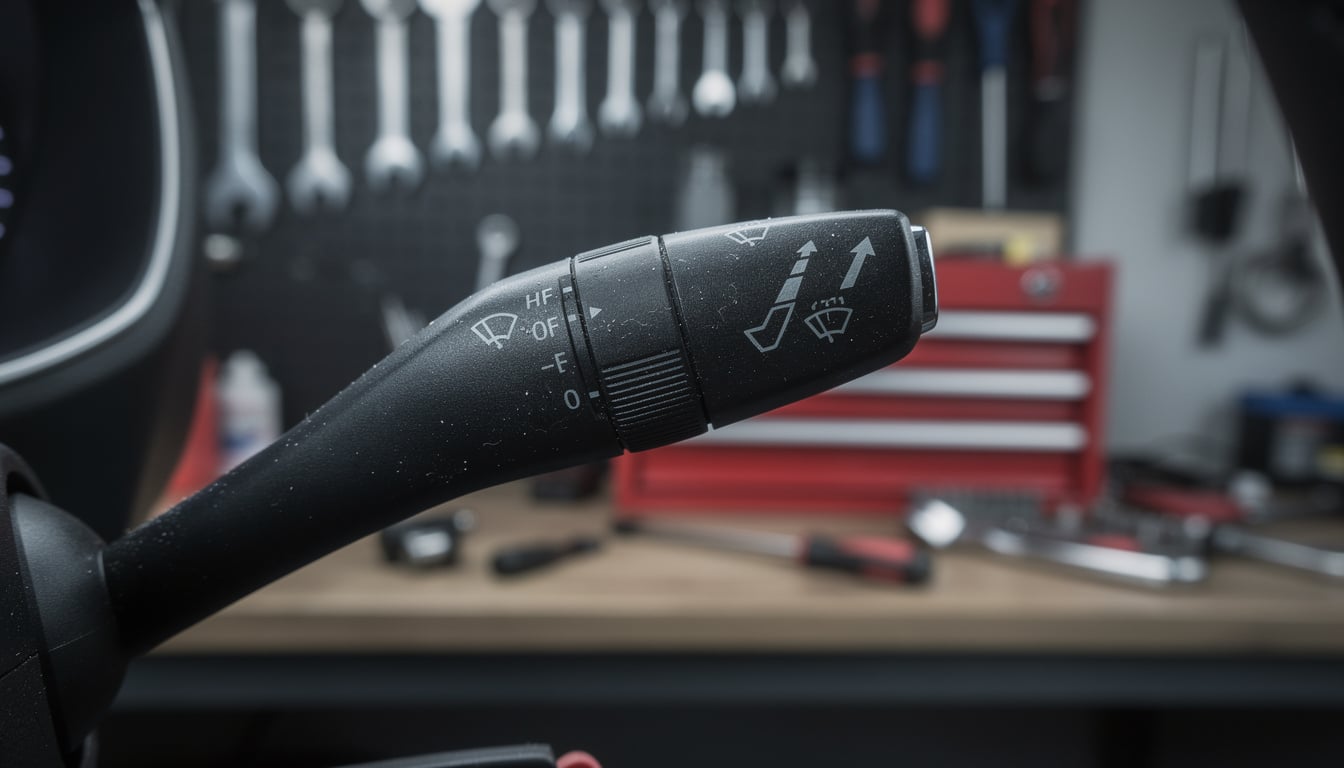
The indicator stalk is the driver’s primary interface for activating the vehicle’s turn signals. Positioned conveniently on either side of the steering column, it allows effortless operation without compromising grip or control. More than just a manual switch, it usually incorporates a self-cancelling feature that disengages indicator lights automatically once the steering wheel straightens after a turn.
When the indicator stalk malfunctions, the effects are noticeable immediately. Some common symptoms include:
- Indicators not activating: The signal lights refuse to turn on, leaving other drivers unaware of your turns.
- Stalk not returning to neutral: After completing a turn, the stalk may remain stuck in the signal position, forcing you to cancel it manually.
- Intermittent or erratic flashing: The indicators flash irregularly or rapidly, often indicative of a poor electrical connection within the stalk assembly.
- Physical damage or looseness: Signs of wear, cracking, or a wobbly feel can be felt when maneuvering the stalk.
Ignoring these signs can compromise road safety and increase the risk of accidents, especially in busy urban environments. Interestingly, reliability reports for certain models like the Peugeot 206 show indicator stalk issues as a recurring complaint linked to high mileage, making timely repair or replacement vital.
💡 Expert Tip: Before assuming a stalk failure, check the fuse box and vehicle manual to rule out electrical problems unrelated to the stalk itself.
Tools and Preparations Needed for a Successful Indicator Stalk Replacement
This DIY task requires basic yet specific tools to ensure safety and efficiency. You’ll need the following:
- Set of screwdrivers (flathead and Phillips)
- Vehicle owner’s manual and wiring diagram
- Socket wrench set for steering column screws
- Plastic pry tools (optional, to avoid damaging trim)
- Multimeter for wiring checks (recommended)
- Electrical tape or connectors for any wiring adjustments
Safety precautions are paramount, especially when working around the steering column where the airbag system may be present. Disconnecting the vehicle’s battery is the first critical step to prevent electrical shocks or accidental deployment of the airbag.
The owner’s manual is a key resource, as it contains the layout of internal components and specific removal instructions for your model. When dealing with vehicles like the Peugeot 406, some complex mechanisms around the column and stalk might require precise handling, so having detailed diagrams is beneficial.
Securing a clear workspace and adequate lighting will accelerate the process and ensure you avoid damaging the delicate switches or wiring harnesses.
Step-by-Step Guide to Remove and Replace the Indicator Stalk
The process may vary slightly depending on manufacturer specifications, but the fundamentals remain consistent across most vehicles. Here’s how to safely and effectively replace the indicator stalk:
Step 1: Disconnect the Car Battery
Start by opening the bonnet and locating the battery. Remove the negative terminal cable to prevent short circuits or accidental airbag deployment. This step is non-negotiable and crucial to maintaining safety throughout the repair.
Step 2: Remove the Steering Column Cover
Next, access the indicator stalk by carefully unscrewing the two small screws holding the plastic shroud in place. Some vehicles might have additional clips or panels that need to be detached first. Carefully pry apart the two halves of the shroud, taking care not to break any plastic tabs.
Step 3: Identify and Disconnect Wiring
Locate the indicator stalk wiring harness. It typically consists of a multi-connector plug. Refer to your vehicle’s wiring diagram to identify the correct connections, especially if the stalk also controls wipers or headlights. Gently unplug the wiring harness without pulling on cables directly to avoid damage.
Step 4: Remove the Old Indicator Stalk
The stalk is usually secured by one or more screws or clips attached to the steering column. Remove these fasteners and carefully slide the old stalk out. Be wary if your system is integrated with other stalks or controls; methodical dismantling prevents accidental damage.
Step 5: Install the New Indicator Stalk
Before installation, compare the new part to the removed stalk to confirm correct fit and function. Install the new stalk by reversing the removal steps — first securing screws, then reconnecting wiring harness, and lastly, replacing the steering column shroud. Once complete, reconnect the vehicle battery.
This procedure generally takes about one hour for someone with moderate mechanical skills. Vehicles with complex steering columns or airbags may require professional intervention—an important consideration for those driving models such as the Jaguar X-Type.
Testing, Troubleshooting, and Risks After Replacing the Indicator Stalk
Once the replacement is complete, initial verification is critical. Switch on the ignition and test each direction of the indicator stalk. Look for:
- Correct functioning of left and right turn signals
- Proper self-cancelling action after turning the steering wheel
- Clean and consistent flashing rate
- Absence of error lights on the dashboard
Should you encounter any irregularities, these could indicate wiring faults or a misaligned stalk. Use a multimeter to check connections or consult the vehicle’s troubleshooting section.
One potential pitfall is the risk of damaging or accidentally triggering the airbag system when working near the steering wheel. This is not only dangerous but can become an expensive repair. For this reason, any work involving airbag removal should be left to professionals.
💡 Expert Tip: After replacing the indicator stalk, take the vehicle for a short test drive to ensure the indicator switch fix operates correctly under real driving conditions.

Additional Tips for Vehicle Indicator Replacement and Maintaining Your Indicator System
Proper maintenance can extend the life of your indicator stalk and enhance your car’s safety. Here are practical tips:
- Regular cleaning: Dust and debris can hinder stalk movement — gently clean around the stalk base during routine car washes.
- Inspect for wear: Check for looseness or cracking during service intervals.
- Electrical checks: Use a voltmeter to ensure wiring integrity especially if you experience flickering or intermittent faults.
- Use genuine parts: While cheaper alternatives are tempting, OEM or high-quality parts guarantee fitter and more reliable replacements.
In some vehicles, specialized stalks control multiple systems, including cruise control and headlights. This increases the complexity of replacement but also underlines the importance of following a step-by-step guide precisely, such as the detailed instructions shared on BreakerLink blog.
| Step | Description | Estimated Time | Tools Required |
|---|---|---|---|
| 1 | Disconnect battery negative terminal | 5 minutes | Wrench or screwdriver |
| 2 | Remove steering column shroud | 10-15 minutes | Screwdrivers, pry tools |
| 3 | Unplug indicator stalk wiring | 5-10 minutes | Vehicle wiring diagram |
| 4 | Remove old stalk from steering column | 10-15 minutes | Screwdrivers, possible socket set |
| 5 | Install new stalk and reassemble | 15-20 minutes | Same as removal |
Familiarizing yourself with key parts and repair steps can alleviate anxiety and improve efficiency during the vehicle indicator replacement process.

How long does it usually take to replace an indicator stalk?
Generally, it takes about 45 minutes to an hour for someone with basic mechanical knowledge to replace an indicator stalk, provided there are no complications such as airbag removal.
Is it dangerous to remove the airbag myself before replacing the indicator stalk?
Yes, removing airbags by yourself is risky. Airbags are explosive safety devices and should only be handled by professionals to avoid injury or accidental deployment.
Can I use a generic indicator stalk for my vehicle?
While some generic stalks may fit, it’s recommended to use OEM parts or high-quality equivalents to ensure compatibility and safety.
What could cause the indicator stalk to stop self-cancelling?
Self-cancelling failure often results from worn internal tabs or mechanisms within the stalk assembly, which fail to detect steering wheel position changes properly.
Why do my indicator lights flash unusually fast at times?
A fast flashing indicator usually signals a bulb failure or an electrical issue in the stalk or wiring, requiring inspection and possible replacement.