Finding and replacing fuses in your car is a fundamental skill that any driver should master to ensure uninterrupted functionality of the vehicle’s electrical components. When an electrical system in your car experiences an overload—often due to a short circuit or worn wiring—it’s the fuse that acts as the first line of defense, protecting your vehicle from severe damage, or worse, an electrical fire. However, the signs of a blown fuse can catch many off guard. If your car windows suddenly stop working, the radio cuts out, or dashboard lights fail without warning, a fuse might be the culprit.
Understanding how to locate and replace these tiny yet vital components can save you time, money, and stress. In this step-by-step guide, I will walk you through the entire process of identifying a blown fuse, safely removing it, and installing a replacement fuse with the correct specifications. Whether you drive a compact hatchback or a robust SUV, this guide is designed to help you navigate fuse maintenance confidently. Moreover, I’ll share practical tips to avoid common mistakes that could lead to further electrical mishaps and provide insights on checking the electrical circuits after a fuse replacement.
This knowledge will empower you as a car owner to perform essential maintenance without needing to visit a garage for simple electrical troubles. With fuses being a critical part of your automobile’s electrical system, safeguarding your vehicle’s reliability and ensuring safety becomes considerably more manageable.
Key Takeaways:
- Identifying a blown fuse by recognizing electrical failures such as dead windows or radio silence.
- Locating the fuse box in common areas like under the steering wheel or in the engine bay.
- Safely removing and inspecting fuses to detect burnt or broken filaments.
- Replacing fuses with exact current rating to avoid damaging your electrical components.
- Testing the system after replacement to confirm the issue is resolved.
How to Locate and Identify Blown Fuses in Your Car Electrical System
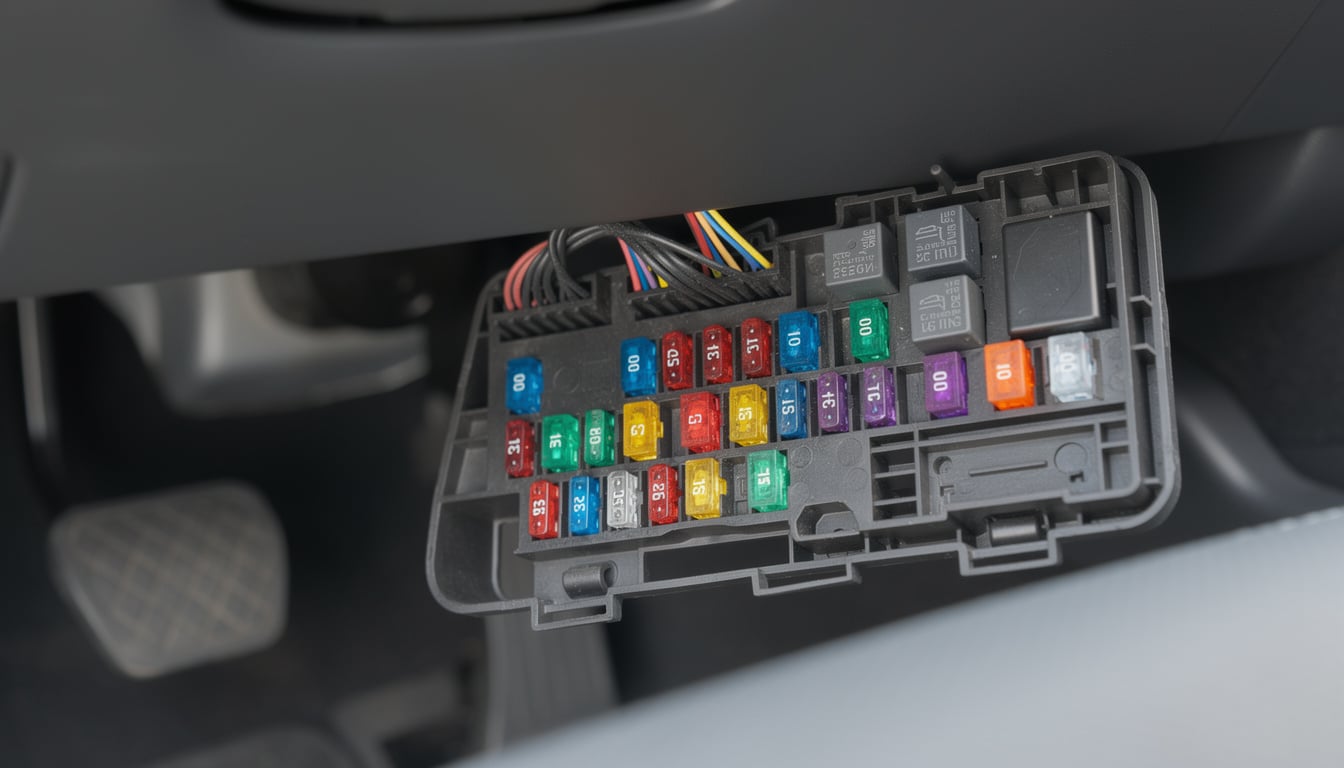
The first step in maintaining your car’s electrical system is knowing exactly where to find the fuse box and how to identify a blown fuse inside it. Most modern vehicles house fuse boxes in accessible areas such as beneath the steering wheel, inside the glove compartment, or in the engine bay. Referencing your car owner’s manual is crucial since the exact location and set-up vary between makes and models. For instance, some Japanese models might place fuse panels within the dashboard, while certain European vehicles install them near the battery.
Once you identify the fuse box location, you will find multiple fuses in various colors, each indicating a specific amperage rating. These colors are not arbitrary; they correspond to standard current loads—for example, red typically represents 10 amps, yellow 20 amps, and blue 15 amps. This coding is essential for matching replacements precisely.
To find the blown fuse, examine the fuse box cover, which generally includes a detailed diagram illustrating the function of each fuse. If the electrical problem is with the car radio, locate the fuse aligned with the audio system. Physically inspecting each fuse is straightforward: a blown fuse usually has a blackened interior or a visibly broken filament. Such information reduces guesswork and speeds up troubleshooting.
In cases where visual inspection isn’t conclusive, using a multimeter to test fuse continuity can give you a definite answer. This simple electronic tool checks if electrical current can pass through the fuse uninterrupted—a broken fuse will show no continuity. Investing in a multimeter can be handy and economical in the long run for diagnosing any electrical issues in your car.
💡 Expert Tip: Always begin your inspection with the car turned off and key removed from the ignition to prevent risks of shock or further damage to the electrical system.
Step-by-Step Process to Safely Remove and Replace a Blown Fuse
Now that you’ve located the blown fuse, the next phase is removing and replacing it correctly. The primary rule is safety: ensure the vehicle is fully turned off, and keys are out of the ignition. This precaution avoids accidental short circuits or shocks while handling electrical components.
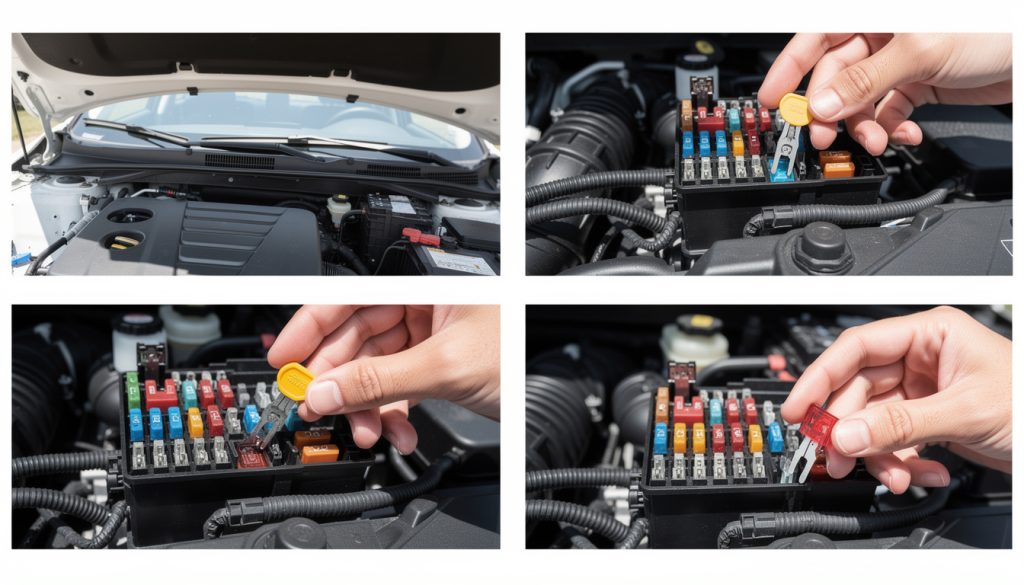
Gently pry off the fuse box cover, typically designed to snap on and off without tools. Some vehicles provide plastic tweezers or fuse pullers specifically designed to grip fuses securely without damaging them. If yours doesn’t include one, use a pair of needle-nose pliers carefully to remove the fuse without applying excessive pressure that might crack the fuse’s plastic casing or damage surrounding components.
If the fuse has a locking mechanism, disengage it with caution. Removing a fuse might require handling multiple fuses until the visually damaged one is found. Remember, a fuse with a darkened window or a severed filament inside signals that it has blown.
After removal, compare the blown fuse with new fuses to ensure the exact amperage rating and color code match. Replacing a fuse with incorrect ratings, for example inserting a 30-amp fuse instead of a 15-amp, can lead to substantial electrical system damage. A higher-rated fuse allows too much current, bypassing critical safety limits, while a lower rating could cause recurrent fuse blows and system interruptions.
Insert the new fuse firmly into the same slot, ensuring it fits snugly to maintain a steady electrical connection. Re-secure any locking mechanisms and close the fuse box cover to protect against dust and debris intrusion.
💡 Expert Tip: Keep a small selection of fuses with different amperage ratings in your glove box to address future issues quickly and avoid unnecessary trips to the mechanic.
Exploring the Role of Fuses in Protecting Your Car and Important Maintenance Practices
Many motorists overlook the importance of fuses until they encounter an electrical problem. Yet, these small components play an outsized role in maintaining your automobile’s safety and operational integrity. When a short circuit occurs—perhaps due to a worn cable touching the car’s metal frame—the fuse will blow to interrupt the current flow and prevent further damage. This safeguard could potentially avoid more costly repairs, like damage to your car’s computer or wiring harness, and even eliminate fire risks.
Regular maintenance includes checking fuses during routine inspections, especially if you notice intermittent or unexplained electrical issues such as flickering dashboard lights or failing power windows. Additionally, when addressing other common mechanical issues, such as those linked to the steering rack symptoms or brake master cylinder failure, it’s prudent to ensure the car’s electrical systems are stable and protected by intact fuses.
Over time, fuses can suffer from corrosion or overheating, which may not be as apparent as a blown fuse but can cause sporadic electrical faults. A visual inspection and occasional replacement of aging fuses help maintain system reliability. Moreover, always replace fuses with the exact type and rating specified by your manufacturer to preserve the electrical system’s integrity.
| Fuse Color | Common Amperage | Typical Application |
|---|---|---|
| Red | 10 Amps | Interior lighting, radio circuits |
| Blue | 15 Amps | Fuel pump, car stereo, sensors |
| Yellow | 20 Amps | Power windows, central locking |
| Green | 30 Amps | Cooling fans, headlights |
How to Test and Verify Your Car’s Electrical System After Replacing a Fuse
Replacing a fuse is not the final step; you must confirm that the associated electrical system functions properly after installation. Start by turning on your car’s ignition and activating the specific system connected to the replaced fuse, such as the radio or power windows, while keeping other electrical devices off. This focused approach isolates your test to the component of interest.
If the system operates normally without blowing the fuse again, you have likely solved the problem caused by a simple overload or a one-off electrical surge. However, if the fuse blows again immediately or the system fails to engage, this may indicate a deeper electrical fault requiring professional diagnosis, such as wiring shorts or component failures. In such cases, it’s best to consult a trusted mechanic rather than attempt further DIY fixes that could exacerbate your vehicle’s issues.
Documenting the fuse replacement and any recurring problems will also help your mechanic pinpoint the issue more efficiently. Remember, a blown fuse is often a symptom, not the root cause, and electrical problems sometimes trace back to components like the fuel filter or engine sensors.

Common Mistakes to Avoid When Handling Fuses and Practical Tips for Long-term Maintenance
Many drivers unintentionally make errors when dealing with car fuses, which can worsen electrical issues rather than resolve them. One frequent mistake is using a fuse with the wrong amperage rating, as mentioned earlier. Another is neglecting to turn off the vehicle before inspecting or replacing fuses, risking injury or further damage.
Additionally, some attempt to bypass a fuse by jumpering it with a wire, which is dangerous and voids safety protocols, potentially leading to dangerous short circuits or fire hazards. Always adhere strictly to proper fuse replacement procedures and never substitute with makeshift solutions.
To maintain your car’s electrical health:
- Carry a basic fuse set suited to your vehicle’s specifications in your glove box for emergencies.
- Perform routine electrical system checks as part of your vehicle’s maintenance schedule.
- Replace any suspicious or corroded fuses promptly.
- Consult vehicle-specific resources to understand which fuse corresponds to which system—for example, online articles about common issues with models like the Peugeot 308 can provide insights on typical fuse-related problems.
- Avoid replacing fuses without checking for underlying electrical faults to prevent repetitive failures.
Handling fuses correctly not only saves you repair costs but enhances your confidence in car maintenance and ensures your vehicle’s safety.