The mass air flow (MAF) sensor is a vital component for maintaining your car’s engine performance by measuring incoming air to optimize fuel delivery. When faulty, it can trigger issues like rough idling, poor fuel economy, and even engine stall, often signaled by the dreaded check engine light. Understanding the key indicators of a malfunctioning MAF sensor can save you time, fuel, and costly repairs by pinpointing problems early.
Key Takeaways :
- Check engine light codes P0100-P0104 often signal MAF sensor faults.
- Symptoms include engine stall, rough idle, delayed acceleration, and increased fuel consumption.
- Dirt buildup is the main cause and can often be fixed by sensor cleaning.
- Persistent issues after cleaning usually require sensor replacement for proper engine function.
- Regular maintenance of the MAF sensor alongside air filter changes ensures optimal airflow measurement.
How Mass Air Flow Sensors Impact Engine Performance and Why They Malfunction
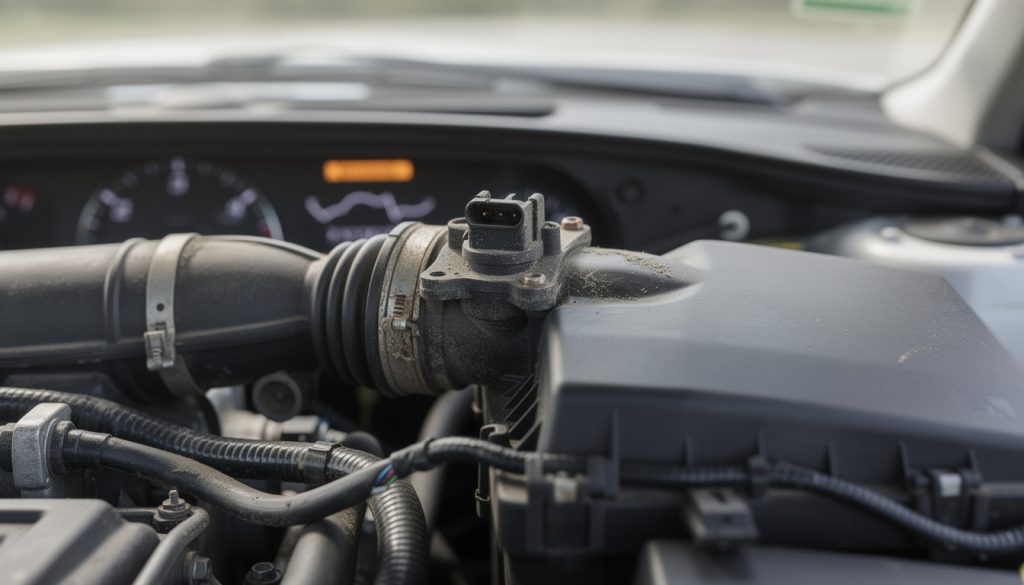
The mass air flow sensor plays a pivotal role in your vehicle’s fuel injection system by accurately measuring the air entering the engine. The sensor communicates this data to the Engine Control Unit (ECU), which adjusts fuel delivery to maintain the perfect air-fuel ratio. Inaccurate airflow measurement affects combustion, leading to symptoms like poor fuel economy and engine stalling.
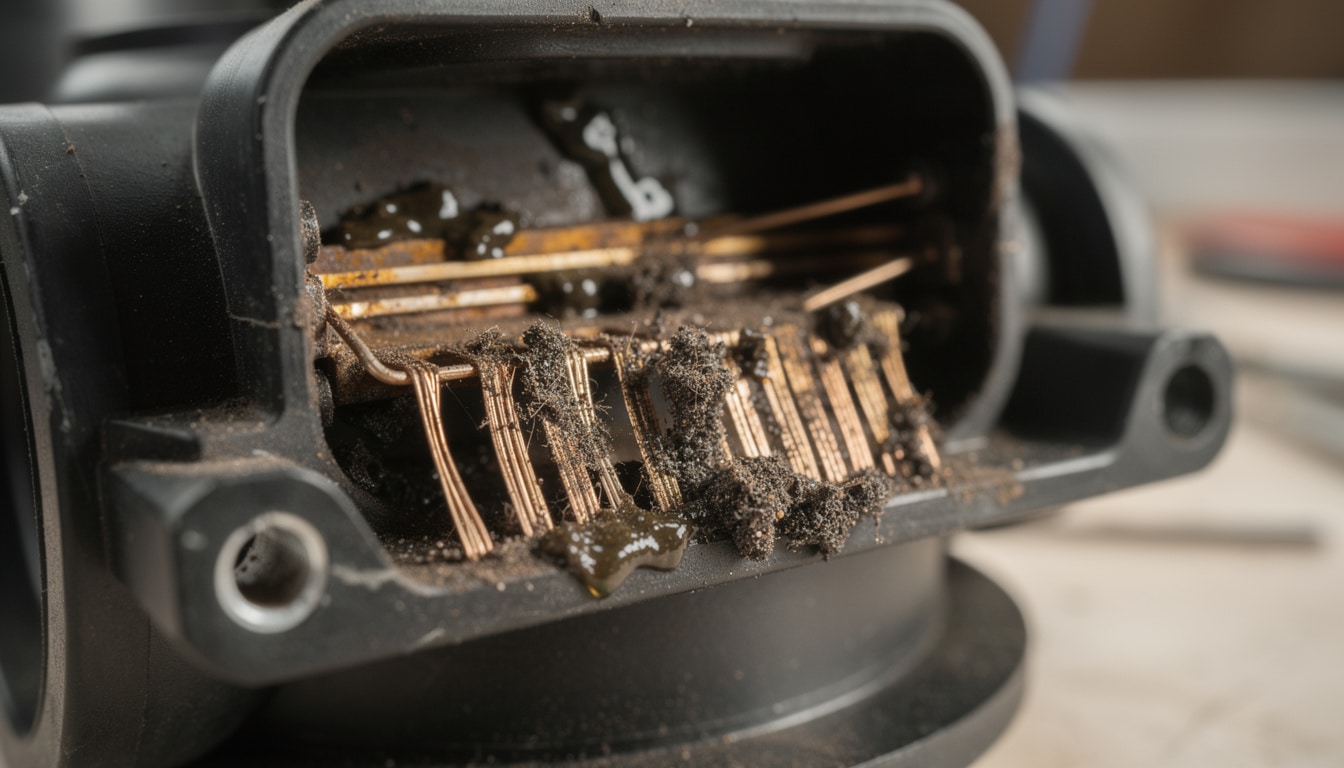
The sensor’s design is ingenious yet delicate: it essentially contains two fine wires, one heated and the other serving as a reference. When air flows over the hot wire, it cools down, and the sensor calculates the amount of cooling based on how much energy the wire needs to stay at a constant temperature. This cooling effect correlates directly with the volume and density of the air entering the engine.
Over time, however, the MAF sensor is vulnerable to contamination. Road dust, dirt, exhaust fumes, and other pollutants build up on the sensor wires, causing inaccurate readings. Additionally, electrical surges can damage the sensor’s circuitry, leading to failure in transmitting accurate data to the ECU. Both scenarios can seriously disrupt engine performance and trigger diagnostic trouble codes.
In real-world driving, I often encounter MAF sensor issues when owners report inconsistent engine behavior, particularly after long highway trips or dusty road conditions. Understanding these mechanical intricacies helps track down problems without wasting time or money on unrelated repairs.
Recognizing the Most Common Symptoms of a Faulty MAF Sensor
Spotting a malfunctioning mass air flow sensor early can prevent severe engine issues. Here are the main signs to look for:
- Check Engine Light Illumination: This is the most immediate warning. When the sensor sends inconsistent data, the ECU logs diagnostic trouble codes like P0100 to P0104. Codes P0171 and P0174 suggest a lean condition caused by incorrect air-fuel mixture, often linked to MAF sensor faults.
- Lean Idling and Engine Stall: If your car idles roughly or stalls, particularly after startup, this likely indicates a lean fuel condition caused by the sensor overestimating airflow.
- Difficulty Starting the Engine: A failing sensor can send wrong airflow data to the ECU, preventing the right fuel amount from reaching the combustion chamber. This slows or prevents engine startup despite good battery and spark plug condition.
- Engine Drag and Power Loss: When accelerating or climbing hills, the engine may struggle and feel sluggish if the sensor fails to correctly balance the air-fuel ratio, causing the powertrain control module to underfuel the engine.
- Delayed Acceleration: Incorrect airflow measurements particularly at higher speeds make the engine respond sluggishly, as the ECU cannot optimize fuel supply fast enough.
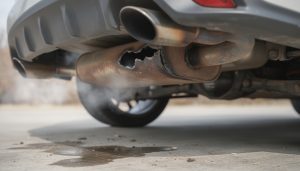
- Excessive Fuel Consumption and Fuel Smell: On the flip side, a faulty sensor might report less airflow, causing the ECU to inject excess fuel. This results in fuel odor escaping the exhaust and higher than average fuel expenses.
In my experience, customers frequently overlook rough idle or delayed acceleration symptoms, attributing them to aging spark plugs or clogged fuel injectors, when the root cause is the mass air flow sensor. Ignoring these signals can escalate problems such as increased emissions and potential engine damage.
Table: Common MAF Sensor Symptoms and Potential Causes
| Symptom | Possible Cause | Severity | Recommended Action |
|---|---|---|---|
| Check Engine Light (Codes P0100-P0104) | Sensor circuit malfunction or contamination | Moderate | Diagnostic scan and sensor inspection |
| Rough Idle or Engine Stall | Dirt buildup causes lean mixture | High | Sensor cleaning or replacement |
| Engine Stall on Load | Incorrect airflow data affects fueling | High | Inspect sensor and fuel system |
| Excess Fuel Consumption | Faulty readings causing rich mixture | Moderate | Sensor reset or replacement |
| Delayed Acceleration | Fuel delivery mismatch at high airflow | Moderate | Throttle body and sensor check |

How to Properly Clean the Mass Air Flow Sensor to Restore Accuracy
One of the simplest and most cost-effective fixes for a malfunctioning MAF sensor is cleaning it. Sensor cleaning can often restore accurate airflow measurement by removing dirt collected on the sensitive wires. Here’s how you can do it safely:
- Locate and Remove the Sensor: The MAF sensor sits between the air filter and intake manifold. Using a standard flathead screwdriver, carefully remove the sensor from the air box, ensuring you don’t damage the delicate wires inside.
- Clean Using a Specialized Cleaner: Use a dedicated MAF sensor cleaner spray or isopropyl alcohol with a soft cloth or swab. Avoid touching or bending the wires. Gently remove dirt and grime from the sensor housing and wires.
- Let the Sensor Dry Completely: Before reinstalling, allow the sensor to air dry fully, usually about 30 minutes, to prevent moisture from causing electrical shorts.
- Reinstall and Test Drive: Refit the sensor and take the vehicle for a test drive. You should notice improved engine smoothness, reduced check engine light activity, and better fuel economy.
Performing this cleaning twice a year along with replacing your air filter helps maintain optimum sensor performance and prevents many common airflow measurement errors. If symptoms persist after cleaning, consider replacing the sensor.
When a MAF Sensor Replacement Is Necessary and What It Involves
If sensor cleaning doesn’t restore engine performance, the mass air flow sensor may be beyond repair. The rates of failure have increased slightly in 2026 due to more complex electronic components and exposure to diverse environmental pollutants.
Replacing the sensor is straightforward, typically costing between $150 to $300, including parts and labor, depending on vehicle make and model. The sensor itself is a relatively affordable component but crucial for accurate airflow measurement and maintaining compliance with emission standards.
The process involves disconnecting the faulty sensor’s electrical connector, removing it from the airbox, and installing the new one in reverse. A diagnostic tool can then be used to clear any fault codes and reset the ECU fuel trim adjustments.
Neglecting a faulty MAF sensor can cause cascading engine issues such as spark plug fouling, increased carbon deposits, and erratic fuel injector behavior, all leading to higher repair costs over time. If you notice persistent signs of engine misfire or loss of power, consult detailed sources like engine misfire causes and signs or car losing power diagnosis for further insights.
💡 Expert Tip: Always replace your air filter before installing a new MAF sensor. A clean intake system drastically extends sensor lifespan and prevents premature failures, saving you money in the long run.

Performing Basic Checks and Preventing Future MAF Sensor Problems
Keeping a mass air flow sensor in optimal shape involves routine checks and preventive steps aimed at avoiding sensor contamination and damage. Here are some practical recommendations:
- Regular diagnostic scans: Periodically scan for diagnostic trouble codes to catch sensor faults early before they impact engine performance.
- Change air filters promptly: A clogged air filter lets more contaminants enter the intake tract and reduce airflow quality, causing sensor malfunction.
- Visual inspection: Check the sensor housing and wiring for visible damage or dirt buildup twice yearly.
- Careful engine bay cleaning: Avoid spraying aggressive cleaners near the sensor wiring or connectors during maintenance.
- Use quality replacement parts: Use manufacturer-recommended sensors and filters to ensure ideal compatibility and longevity.
Many drivers underestimate the MAF sensor’s sensitivity to environmental factors, but neglect can lead to increased vehicle emissions and underperformance. Seasonal checks combined with attentive driving habits provide the best insurance for avoiding costly engine repairs.
💡 Expert Tip: If your vehicle is prone to dusty conditions, consider installing a pre-filter upstream of the air intake or increasing the frequency of air filter replacements to safeguard your sensor.
What is the primary role of the mass air flow sensor?
The MAF sensor measures the amount and density of air entering the engine and relays this information to the ECU to adjust fuel injection for efficient combustion.
Can a dirty MAF sensor cause the check engine light to come on?
Yes, dirt buildup can cause incorrect airflow readings, triggering diagnostic trouble codes that illuminate the check engine light.
How often should the mass air flow sensor be cleaned?
Cleaning the sensor every six months or along with air filter changes is recommended to maintain accurate airflow measurement.
What could happen if a faulty MAF sensor is ignored?
Ignoring a faulty sensor can worsen engine performance, increase fuel consumption, cause engine stalls, and potentially damage other engine components.
Is replacing the MAF sensor complicated or expensive?
Replacement is straightforward and relatively affordable, usually costing $150-$300, including parts and labor. Proper installation ensures restored engine efficiency.