The car ignition cylinder is a critical component that allows you to start your engine and safeguards your vehicle against theft. While modern vehicles increasingly adopt advanced wireless key systems, many cars still depend on the traditional mechanical ignition cylinder. This part endures constant use and is prone to wear and faults. Recognizing the signs of a faulty ignition cylinder early and knowing how to replace it can save you time and avoid expensive repairs. This step-by-step guide breaks down the process clearly and practically, enabling you to tackle car ignition replacement with confidence.
Key Takeaways :
- The ignition cylinder enables engine start and acts as a vehicle security barrier.
- A sticky or unresponsive key often signals a failing ignition lock cylinder.
- Basic tools like an adjustable spanner and a straightened paper clip are sufficient for replacement.
- Disconnect the vehicle battery before starting any ignition cylinder repair to avoid electrical hazards.
- Proper ignition cylinder installation is confirmed by smooth key operation and successful engine start.
Identifying Symptoms and Causes of a Faulty Car Ignition Cylinder
The very first indicator that your car key cylinder might be failing is difficulty turning the key or feeling a sticky, rough mechanism. It’s not uncommon for the key to catch or refuse to rotate properly, preventing the car from starting. This mechanical fatigue stems from continual use, dirt intrusion, or even internal part wear. In some cases, debris or broken key parts lodged inside the cylinder can exacerbate the problem.
Observable symptoms of a faulty ignition cylinder include:
- Key sticking or jamming when turning to start the engine.
- Ignition turning but engine does not start.
- Key won’t fully insert or remove from the ignition slot.
- Electrical accessories fail to power on in the accessory position.
Recognizing these signs early is essential. Failure to do so can escalate to total ignition lock failure, causing the vehicle to be immobilized and potentially leading to costly tow and repair bills. It’s crucial to distinguish this issue from other electrical faults related to the ignition switch itself or fuel delivery problems, so a systematic diagnosis helps pinpoint if the cylinder specifically needs replacement.
Common causes include wear of tumblers inside the cylinder or a broken spring mechanism that fails to return the key to the off position. Exposure to moisture or dirt can cause rust and corrosion, impacting the smooth movement of internal parts. It’s worth noting that in vehicles with older ignition designs, these failures tend to occur after 100,000 miles or more, as the mechanical components undergo extensive wear.
💡 Expert Tip: Regularly lubricate your ignition cylinder with a graphite-based spray to extend its lifespan and reduce wear, but avoid oil-based lubricants that attract dust and debris.
Essential Tools and Preliminary Safety Measures for Ignition Cylinder Repair
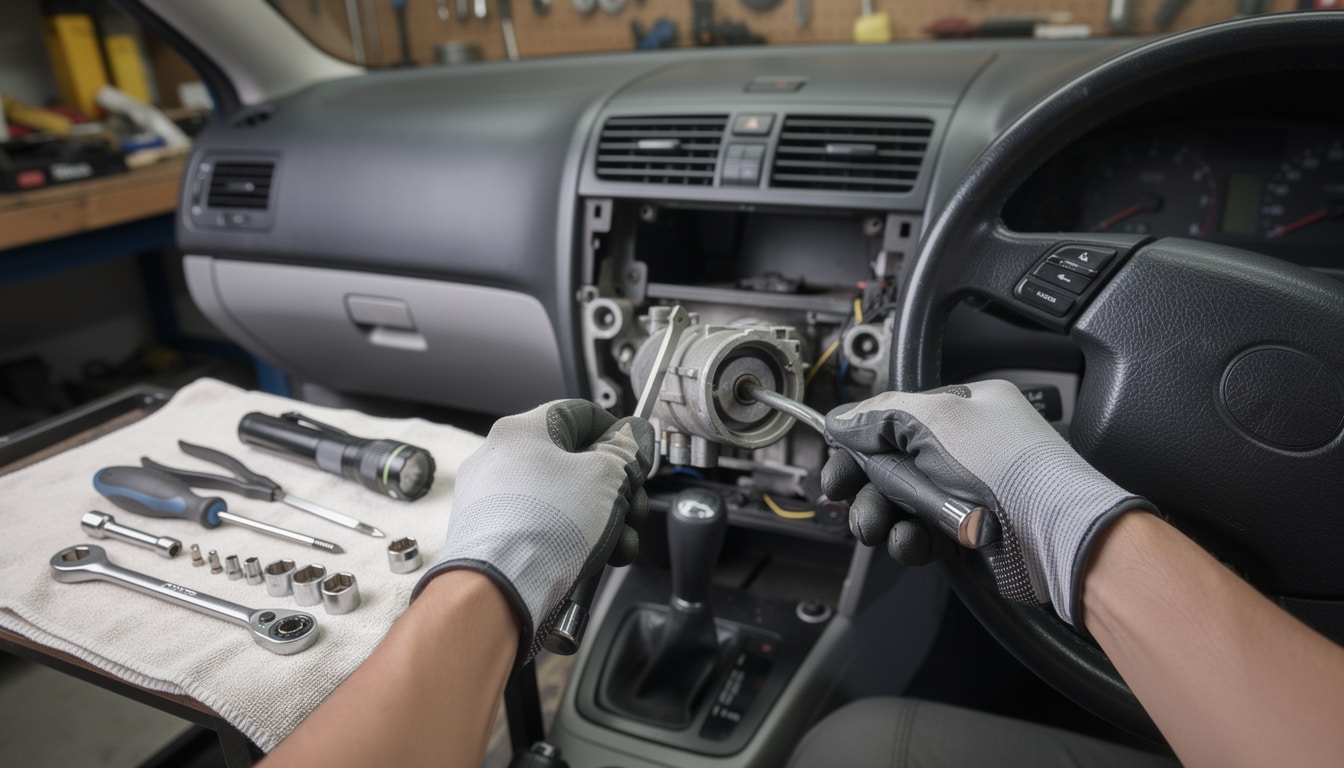
Before diving into the replacement, you must prioritize safety and ensure you have all necessary tools prepared. The primary equipment includes an adjustable spanner and a paper clip — surprisingly minimal gear for an important car ignition replacement. You will also need your replacement ignition cylinder, which matches the make and model of your vehicle for proper fitment and security compatibility.
Safety steps ahead of the replacement include fully disconnecting the car’s battery to prevent accidental electrical shorts or shock. This is done by opening the car bonnet and locating the negative battery terminal, normally marked with a “-” symbol on the right. Use an adjustable spanner to carefully loosen and remove the cable connection. Keep it away from the battery to avoid accidental reconnection.
Electric safety is paramount, particularly for modern vehicles where components can be sensitive to voltage spikes or static electricity. After disconnecting the battery, wait at least 10 minutes before working near the ignition switch to allow residual electrical energy in the circuits to dissipate.
Gather your tools and replacement part in a clean, well-lit workspace. Having all elements ready beforehand expedites the process and reduces the risk of mistakes or losing small components during the procedure.
Checklist for materials:
- Adjustable spanner
- Straightened paper clip
- Replacement ignition cylinder compatible with your vehicle
- Protective gloves
- Clean rag or cloth
Safety Tips:
- Always disconnect battery before working on electrical components.
- Work in a dry environment to prevent moisture damage.
- Keep small parts secure in a container to avoid loss during assembly.
Step-by-Step Process to Remove and Replace the Faulty Ignition Cylinder
Replacing the ignition cylinder involves a precise sequence to avoid damaging the steering column or electrical systems. Here is a straightforward walkthrough:
- Insert the car key and turn it to the accessory position. This positions the internal mechanism to release the cylinder.
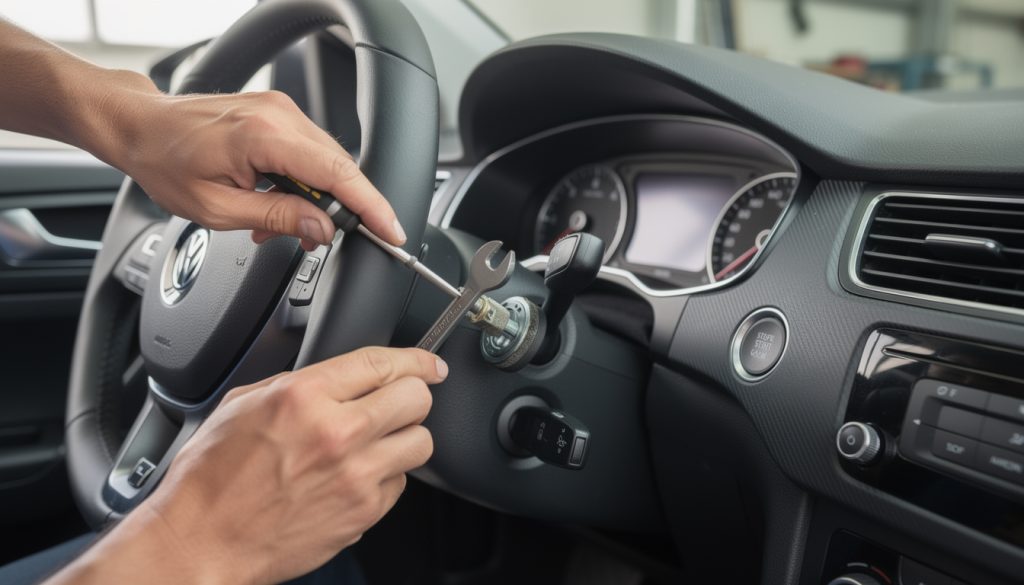
- Straighten a paper clip and insert it into the small hole at the base of the key slot. This hole houses the release pin that locks the cylinder in place.
- While pressing the release pin with the paper clip, turn the key back to the off position. This disengages the lock, allowing you to gently pull the ignition cylinder out.
- Insert the key into the new ignition cylinder. Slide the assembly into the opening left by the old cylinder, ensuring it fits securely.
- Turn the key to the accessory and then off positions to lock the cylinder in place.
- Reconnect the battery and start your vehicle to test installation success. The key should turn smoothly without catching. The engine should start normally.
Should you encounter resistance or difficulty removing the ignition cylinder, avoid forcing it. Double-check that the release pin is fully engaged and that the key is correctly turned to accessory mode.
This procedure’s simplicity makes it accessible for drivers with minimal mechanical expertise, empowering you to perform ignition cylinder repair independently and cut down on mechanic fees.
Common Challenges and Troubleshooting During Ignition Cylinder Installation
Even with a straightforward process, several issues can arise during ignition cylinder installation. Understanding these problems can help you avoid them and know how to resolve them if they occur.
Key sticking or failure to turn after installation: This usually indicates misalignment of the cylinder or incomplete seating inside the ignition housing. Removing and reinserting the cylinder while ensuring the key is turned to accessory position often fixes this.
New key won’t operate the ignition: After replacement, keys must be compatible with the new cylinder tumblers. Some vehicles’ ignition cylinders are coded to the immobilizer system. If this is the case, programming your new cylinder or key may require professional equipment.
Electrical accessories don’t activate in the accessory position: This can stem from battery disconnection issues or ignition switch problems. Verify you reconnected the battery terminal properly and check fuse integrity — a common fix in car fuse replacement routines.
Unintended key jamming or breaking: A worn or damaged key can exacerbate ignition issues. Always ensure the key itself is in good condition before starting the process, especially when inserting it into a new cylinder.
To assist you further, here is a quick troubleshooting table:
| Problem | Possible Cause | Solution | Severity |
|---|---|---|---|
| Key doesn’t turn | Misaligned cylinder or worn tumblers | Re-install cylinder, lubricate, replace if worn | Moderate |
| Engine won’t start | Faulty ignition switch or cylinder mismatch | Check ignition switch, confirm compatibility | High |
| Electrical accessories fail | Battery disconnected, blown fuse | Reconnect battery, replace fuse | Low |
| Key stuck or breaking | Worn key or cylinder damage | Replace key or ignition cylinder | Moderate |
Awareness of these common difficulties helps you prepare for smooth ignition cylinder repair and avoid unnecessary delays or extra costs.
Maintaining Your Ignition System Post-Replacement and Additional Tips
Once the new ignition cylinder is installed, proper maintenance can extend its life and improve vehicle reliability. I recommend periodic cleaning and lubrication of the cylinder to prevent buildup that causes sticky keys. Check your key’s condition regularly and avoid using heavy keychains that stress the ignition mechanism.
Besides mechanical wear, faulty ignition parts may contribute to engine misfire or power loss symptoms. If the engine cranks but fails to start, inspect links between the ignition system and engine fuel systems. You can find invaluable tips on troubleshooting related issues at car not starting tips and ways to address car losing power causes.
In some cases, a newly installed cylinder may require synchronization with immobilizer systems or ignition switches. If your vehicle exhibits persistent starting difficulties, professional diagnostics or key reprogramming might be necessary.
💡 Expert Tip: After replacing your ignition cylinder, perform a thorough test drive focusing on starting, accessory power functions, and key smoothness to ensure complete repair success.
What are early signs my ignition cylinder is faulty?
Early signs include sticky or hard-to-turn keys, keys getting stuck in the ignition, and difficulty starting the engine. Mechanical wear or debris buildup often causes these symptoms.
Can I replace the ignition cylinder myself without professional help?
Yes, with basic tools like an adjustable spanner and a paper clip, most drivers can replace the ignition cylinder following a step-by-step guide safely.
How much does ignition cylinder replacement typically cost?
Parts usually cost between $50 and $150, depending on your car model. Labor can add $100 to $200 if done professionally, but DIY replacement cuts these expenses significantly.
What should I do if my new ignition cylinder doesn’t work with my car key?
If the new cylinder is incompatible with your car’s security system, you may need to reprogram the key or ignition system using specialized equipment or seek professional automotive repair service.
Is disconnecting the battery absolutely necessary before starting ignition cylinder repair?
Yes, disconnecting the negative battery terminal prevents electrical shorts and ensures your safety while working on ignition components.